How to Clean Your Dog's Teeth – The Ultimate Guide
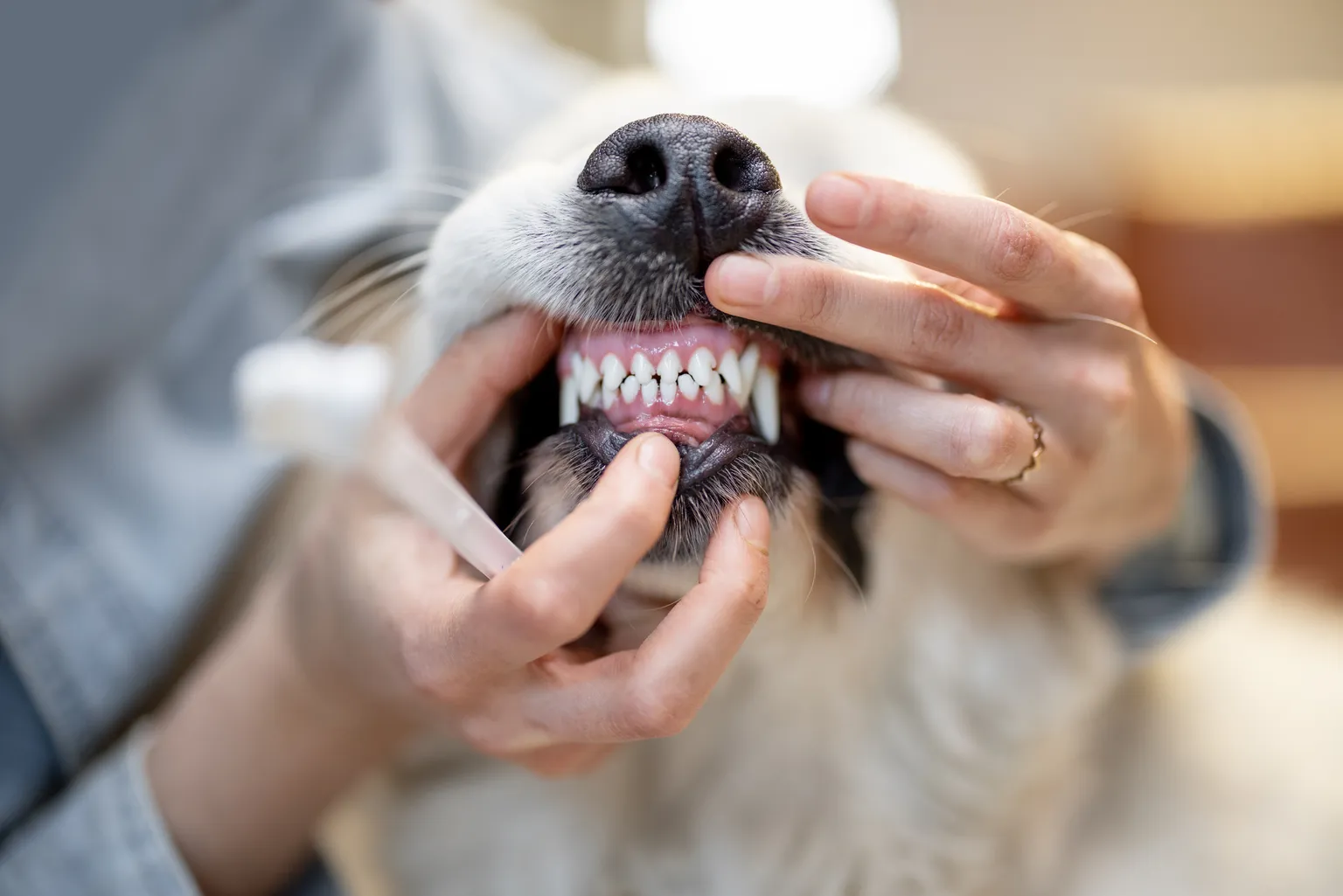
Cleaning your dog's teeth comes down to one classic method: Daily brushing with a dog-safe toothpaste. Plus, a rotation of chews, wipes or water additives on the days brushing doesn't happen. Most dogs (puppy, adult and senior) need some form of at-home dental care 3–5 times a week to meaningfully slow plaque build-up.
That's the short answer. Here's how to actually do it, why it matters more than most pet parents realize, and what to do if your dog won't sit still for a toothbrush.
Why Cleaning Your Dog's Teeth Matters
According to the American Kennel Club, by age three, most dogs already show early signs of dental disease – it's one of the most common (and most under-treated) health issues in adult dogs.
Left unmanaged, plaque hardens into tartar, tartar irritates the gumline, and irritated gums are where bigger problems start. As Veterinarian Dr. Scott Miller says, "It's a very common illness, but very few owners would even try to clean teeth."
For the fuller picture on symptoms and causes, checkout our dental dog health guide.
There is some good news. Cleaning your dog's teeth is one of the more preventable parts of dog ownership. It just needs to become a routine, not a one-off.

What Happens If You Skip It: The Real Cost of Poor Dental Care
It's easy to treat teeth cleaning as optional when your dog seems fine. The problem is that dog periodontal disease develops quietly, underneath the gumline, well before it's obvious from the outside.
Here's the progression you'll usually find:
- Plaque forms daily. A soft, bacterial film builds up on the teeth within hours of eating – this is normal and reversible with brushing.
- Untreated plaque hardens into tartar within days and tartar can no longer be brushed away. At this point, usually only a professional cleaning removes it.
- Tartar buildup irritates and inflames the gums, a stage called gingivitis. This is usually the first visible sign – red, puffy or bleeding gums.
- Left unaddressed, gingivitis progresses to periodontal disease, where the infection moves below the gumline and starts breaking down the tissue and bone anchoring the teeth. This stage is not reversible – it can only be managed.
- Advanced cases lead to dog tooth decay, loose teeth, and tooth loss, along with chronic pain that many dogs mask well enough that owners don't notice until it's severe.
Beyond the mouth itself, the bacteria involved in advanced dental disease can enter the bloodstream and has been linked to added strain on organs like the heart, liver and kidneys – one more reason vets treat dental care as whole-body health, not a cosmetic afterthought.
The flip side is genuinely good news: Every stage before periodontal disease is preventable, and even periodontal disease is manageable when caught early.
A dog with a consistent home cleaning routine is far less likely to need invasive (and expensive) intervention down the line – and far more likely to keep a full, healthy set of teeth well into their senior years.
The Best Way to Clean Your Dog's Teeth (Step-by-Step)
Brushing remains the gold-standard method vets recommend – nothing else mechanically removes plaque as effectively.
- Pick the right tools. Use a dog-specific toothbrush (finger brush for beginners, angled-head brush for easier back-tooth access) and a dog-safe toothpaste. Never use human toothpaste – xylitol and fluoride are toxic to dogs.
- Let your dog taste the toothpaste first. Most dog toothpaste is poultry or peanut-flavored. A day or two of just letting them lick it off your finger builds positive association before a brush is involved. It makes things so much easier.
- Start with lips, not teeth. Gently lift the lip and touch the brush to a few front teeth for a few seconds. Reward. End the session before your dog wants to.
- Work up to full brushing. It helps if you focus on the outer surfaces of the teeth (your dog's tongue does most of the work on the inner surfaces naturally). A 45-degree angle at the gumline, in small circles, is the technique vets teach.
- Aim for daily, accept every-other-day. Daily brushing gives the best plaque control, but even 3 times a week meaningfully outperforms nothing.
Puppy teeth cleaning works the same way, just earlier and gentler – introduce the taste and touch of brushing as soon as adult teeth come in (around 6 months), so it's normal by the time dental disease risk actually starts climbing.
Building a Dog Dental Care Routine That Actually Sticks
The method matters less than the consistency. A simple, realistic routine looks like:
- Daily (or near-daily): Toothbrushing, ideally at the same time each day (after a walk works well – your dog is calmer and more food-motivated for the reward after).
- Ongoing: A dental chew or water additive on the days brushing doesn't happen.
- Weekly: A quick visual check – lift the lip, look for red gums, brown buildup, or bad breath that's gotten noticeably worse.
- Annually (or as your vet recommends): A professional dental exam, and cleaning if needed.

Natural Ways to Clean Your Dog's Teeth
Brushing isn't the only lever, and for dogs who genuinely won't tolerate a toothbrush, these are legitimate (if less effective on their own) supporting methods:
- Dental chews – mechanical abrasion as your dog chews helps scrape plaque off tooth surfaces. Look for the VOHC (Veterinary Oral Health Council) seal, which signals the product has been tested for actual plaque/tartar reduction, not just marketing claims.
- Raw, appropriately-sized bones or dental-specific chew toys – check with your vet first; not all dogs or breeds are good candidates and hard bones carry a fracture risk.
- Water additives – added to your dog's drinking water, these help reduce bacteria that contribute to plaque. Lowest-effort option, but also the mildest effect.
- Dental powders – sprinkled on food, these are one of the easiest habits to build since they require zero handling of your dog's mouth.
Remember though: None of these fully replace brushing – think of them as covering the gaps in a realistic routine, not a substitute for it.
Cleaning Your Dog's Teeth at Home: What You Actually Need

A basic at-home dental kit:
- Dog-specific toothbrush or finger brush
- Enzymatic dog toothpaste
- A VOHC-approved dental chew for off-days
- Optional: Dental wipes for dogs who tolerate touch but not a brush
You don't need anything more elaborate than this.
Consistency with basic tools outperforms occasional use of premium ones.
FAQs
How often should you brush your dog's teeth?
Daily is the most ideal frequency, but 3–4 times a week is still meaningful and reduces plaque build-up well compared to no brushing at all. Puppies can start as soon as their adult teeth come in, around 6 months old.
Most dogs start to develop teeth and gum issues around the age of 3, so it's important to start making this a regular habit as soon as you can. If daily brushing isn't realistic, pair a few weekly sessions with a dental chew or water additive on the other days to keep coverage consistent. Remember, if you're looking for specific recommendations, please consult your vet.
What can I use instead of a toothbrush to clean my dog's teeth?
Instead of a toothbrush to clean your dog's teeth, you can use a few other options. These include: dental wipes, dental chews, water additives, and dental powders. All of these options are reasonable alternatives for dogs who won't tolerate brushing or if it's just not a realistic way to clean their teeth as their owner.
They're generally less effective at plaque removal than mechanical brushing, which is why vets tend to recommend it as the main way to clean dogs teeth. But, a decent approach would be to layer these together options together, rather than using alone. Start with whichever your dog tolerates best and build from there.
How much does professional dog teeth cleaning cost?
Professional cleanings can be expensive. They typically run from a couple hundred to over a thousand dollars. What does it all depend on? Factors like whether anesthesia, X-rays, or extractions are needed. Costs vary significantly by region and by how advanced any existing dental disease is.
This is where consistent at-home care comes in. It's one of the most effective and recommended approaches to really keep their oral health in a good place. It's also one of the best ways to reduce how often – and how extensively – professional cleaning is needed. So, the more you're on top of their at-home cleaning routine, the better.
Can I clean my dog's teeth with just water or a cloth?
You can usually clean your dog's teeth with a damp cloth wiped along the teeth and gums. It actually provides mild mechanical cleaning and can help a dog get used to mouth handling before introducing a brush.
Toothbrushing with a standard toothbrush or finger brush can be difficult, because dogs tend to be wary and want to move around. If you're a dog owner, you know the struggle. While this method won't remove plaque as effectively as brushing, it's still a reasonable starting point for dogs who resist a toothbrush entirely, so it's worth trying if that's what you're leaning towards.
To Sum Up
Cleaning your dog's teeth doesn't require a complicated routine – it requires a consistent one. Daily brushing is the most effective single habit, dental chews and powders fill the gaps, and a yearly vet check catches anything building up underneath.
Start small, build the habit gradually, and your dog's future self (and your vet bill) will thank you.