
You know about human multivitamins, but in case you didn't know, dogs have them too. So, what are they all about?
Well, most diets have gaps when it comes to dogs. It's only natural. Unless, your dog is on a commercial food diet, in which case they probably have what they need.
But, for the dogs whose diet does have gaps, a multivitamin can be a useful part of the routine.
The things to keep in mind? Quality, concentration and format vary enormously from one product to the next.
This guide covers which dogs genuinely benefit, what to look for on the label, which format suits your dog and the common mistakes that waste money or overload your dog with nutrients they already get.
Which Dogs Actually Benefit from a Multivitamin?
Dogs that benefit most from a multivitamin are those whose diet or life stage leaves real nutritional gaps.
If your dog falls into one of these groups, a daily multivitamin is worth discussing with your vet:
- Dogs on home-cooked or raw diets. Homemade meals are hard to balance and many miss key vitamins and minerals, unless a vet nutritionist designed the recipe.
- Picky eaters. A dog that regularly leaves half its bowl isn't getting the full nutrition the food was formulated to deliver.
- Senior dogs. Appetite often drops with age and nutrient absorption can decline too. So, senior dogs may need a top-up of what they're missing.
- Dogs in recovery. After illness or surgery, your vet may recommend short-term nutritional support while your dog gets back on track.
- Highly active and working dogs. Dogs with heavy exercise loads may have higher nutritional demands.

What to Look for in a Dog Multivitamin
The best multivitamin for dogs covers the nutrients that matter, in forms your dog can absorb, at levels matched to a dog's body weight. Here's what they should include at a bare minimum:
- Vitamin A: Supports vision, skin and immune health.
- B-complex vitamins: Support energy metabolism and a healthy nervous system.
- Vitamin D: Supports calcium balance and bone health, but the amount needs to be right because too much is harmful.
- Vitamin E: An antioxidant that supports skin, coat and cell health.
- Zinc and selenium: Trace minerals that support skin, coat and immune function.
Form matters as much as the list.
Some nutrient forms absorb better than others. Chelated minerals, for example, are often chosen for absorption. A brand that explains which forms it uses and why is usually a better bet than one that just lists names.
What to avoid: Long lists of fillers, artificial colors, vague "proprietary blends" that hide levels and anything sweetened with xylitol, which is toxic to dogs.
If gut health is part of your goal too, check out our gut health guide.
How to Read a Dog Supplement Label

A good dog supplement label tells you exactly what's in each serving and who stands behind the product. Look for these four things:
- Active ingredients per serving. Each vitamin and mineral should be listed with an exact amount per chew, scoop or pump. If you can't see concentrations, you can't judge the product.
- Concentrated by weight. Quality products give serving sizes by body weight, so a 15-pound terrier and a 90-pound shepherd aren't getting the same amount.
- The NASC Quality Seal. The National Animal Supplement Council seal shows the company follows its quality standards and passes regular independent audits.
- Lot number and expiration date. These signal proper manufacturing controls and help with traceability if there's ever a problem.
A contact number for questions is another good sign. Brands confident in their product make it easy to reach them.
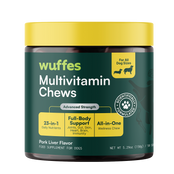
Our Multivitamin Chews are a great place to start if you're looking for something now.
Chew vs. Powder vs. Liquid: Which Format Is Best?

The best format for a dog multivitamin is the one your dog will reliably take every day. Each has its strengths:
Soft chews
Best for: Dogs that love treats or an easy daily routine.
Watch out for: Added calories and sugars and the fact it's harder to split for small dogs.
Powder
Best for: Picky eaters and it's precisely concentrated by weight.
Watch out for: Some dogs easily notice it in food, so you should try to mix it in.
Liquid
Best for: Seniors, small dogs and dogs with dental issues.
Watch out for: Shorter shelf life and once it's opened, it can be messy.
If your dog refuses one format, switching to another is often easier than forcing it.
Common Mistakes When Choosing a Dog Multivitamin
The most common mistake is buying a dog multivitamin based on marketing rather than what's actually on the label. Watch out for these:
- Falling for big claims. A product promising to transform your dog's health in days is overselling. Multivitamins support overall nutrition; they don't work miracles.
- Ignoring the nutrient forms. Two products can list the same vitamins and perform very differently depending on the forms used.
- Doubling up. Adding a multivitamin on top of a complete diet, plus other supplements, can push fat-soluble vitamins and minerals too high.
- Giving human vitamins. They're concentrated for people and can contain xylitol or high iron. Our guide on whether dogs can have human vitamins covers why.
- Skipping the vet conversation. A quick check helps you choose the right product, or confirms you don't need one.
FAQs
Can dogs overdose on vitamins?
Yes, dogs can overdose on vitamins and it's more common than most dog people think. The biggest risks come from fat-soluble vitamins, especially vitamin A and vitamin D, because the body stores them rather than flushing out the excess. Too much vitamin D can cause vomiting, excessive thirst, and kidney damage. It's always worth checking with your vet if you're concerned.
Minerals like zinc and iron can also become toxic at high levels. Overdoses usually happen when dog people double up on supplements, give human products or a dog gets into the bottle. Stick to the label concentration, keep chews out of reach and call your vet if you suspect an overdose.
Are daily vitamins safe for dogs long term?
Daily vitamins are generally safe for dogs long term when the product is well formulated and concentrated for your dog's size. The key is making sure the multivitamin fills a real gap rather than piling extra nutrients on top of a complete diet.
Over months and years, unnecessary doses of fat-soluble vitamins and minerals can build up in the body. That's why it's worth reviewing your dog's supplement routine at every annual checkup. Your vet can look at diet, age, weight and bloodwork to decide whether a daily multivitamin still makes sense or whether it's time to adjust or stop.
Can I give my dog human multivitamins?
You shouldn't give your dog human multivitamins. They're concentrated for people, so the amounts of vitamins like A and D can be far too high for a dog, especially a small one. Many popular human formulas also contain iron at levels that can be dangerous for dogs.
Some chewable and gummy vitamins are sweetened with xylitol, which is highly toxic to dogs even in small amounts.
A dog multivitamin is formulated around canine needs and body weight, which makes dosing much safer.
How do I know if my dog's multivitamin is working?
You'll know your dog's multivitamin is working mostly through gradual, overall signs rather than one dramatic change. Over six to eight weeks, look out for steadier energy, a healthier-looking coat, consistent appetite and normal digestion.
If your dog had a diagnosed deficiency, follow-up bloodwork from your vet is the most reliable way to confirm improvement. Keep in mind that a multivitamin supports overall nutrition; it won't fix a medical problem on its own. If you see no change after a couple of months, or new symptoms appear, talk to your vet about whether the product is really the right fit.
To Sum Up
Dog multivitamins are most useful for dogs with real nutritional gaps, like those on homemade diets, picky eaters and seniors. Choose a product with clear concentrations per serving, weight-based amounts and the NASC Quality Seal.
Our best advice? Pick the format your dog will actually take and avoid doubling up on nutrients already in their food. When in doubt, always check with your vet first.