Dog Dental Tools: What's Safe to Use at Home (and What Isn't)
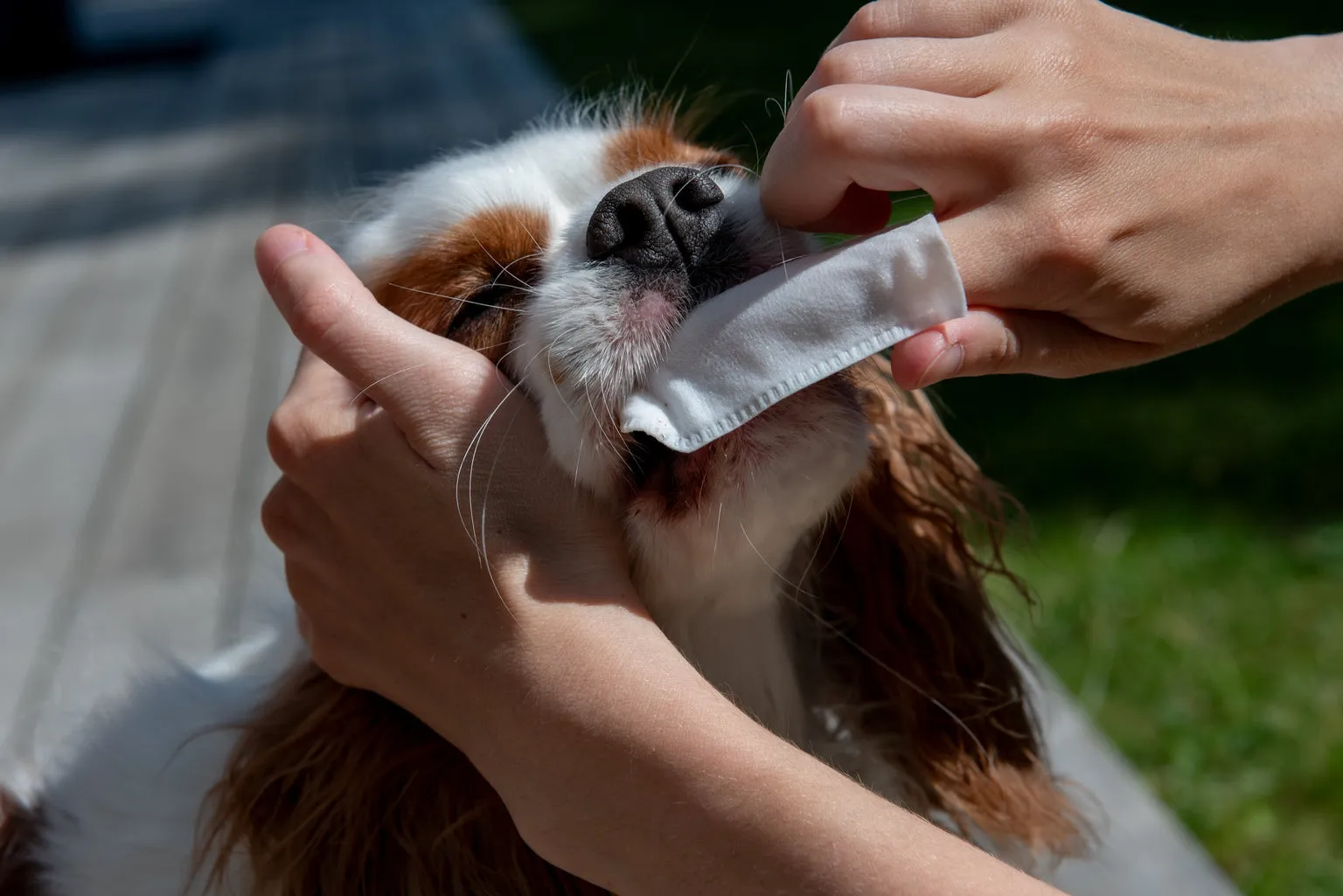
Not every dog dental tool on the market is safe to use without training. Finger brushes and dental wipes are low-risk and generally pretty safe to use at home. It's the method most opt for.
Metal scalers and picks marketed for at-home tartar removal carry on the other hand, carries real risk of gum and enamel damage if you're not trained to use them. Ultrasonic devices sit somewhere in between, depending on the product and how they're used. If you're looking for more on how to clean your dog's teeth – check out our guide to dog teeth cleaning.
So, before you start doing something, we're laying out the differences and risks for different dog dental tools.
Types of Dog Dental Tools Categorized by Risk Level
Low risk, safe for daily use:
- Finger brushes and soft-bristled toothbrushes
- Dental wipes
- Water additives

Use with caution, limited effectiveness at home:
- Ultrasonic dental cleaning devices marketed for home use
Higher risk – best left to professionals:
- Metal dental scalers and picks marketed as "tartar remover tools"
The tools in that first group support a daily prevention routine. So, if you're also adding a dental supplement, like a dental chew, dental wipe or dental powder, that's an even stronger dog dental health routine.
The tools in the last group are designed for use by someone trained to avoid the gumline and know how much pressure enamel can take – which is exactly what's missing when they're used at home without guidance.
Are Dental Scaling Tools Safe to Use at Home?
Generally, no – not without professional training. A metal scaler applied incorrectly can scratch enamel, injure the gums or leave sharp edges on the tooth surface that actually attract more plaque than before.
There's also a practical problem: Hardened tartar frequently extends below the gumline, where you can't see it and a hand-held tool can't safely reach it without risking injury to the gum tissue. We don't want this.

This is the same caution we give in our guide on removing tartar from dog teeth. Tartar that's already visible needs a professional cleaning from a vet, not a home tool.
If your dog tolerates having their mouth handled and you want to try light removal of very minor, fresh surface buildup, a purpose-made pet dental tool with a blunt, dog-specific design is a lower-risk option than a generic human dental pick – but this is not a substitute for professional care once tartar is established.
Ultrasonic Teeth Cleaning for Dogs: What to Know
Ultrasonic teeth cleaning uses high-frequency vibration to break up tartar and plaque, and it's the method vets use during a professional cleaning under anesthesia – precise, controlled and reaching below the gumline safely.
At-home ultrasonic devices marketed directly to consumers work on a similar principle, but with real limitations: They require your dog to stay still and tolerate the vibration and sound for long enough to be effective and there's limited independent evidence on how well consumer-grade devices perform compared to a professional tool in trained hands.
They're not inherently dangerous the way a metal scaler is, but they're also not a proven equivalent to a professional cleaning – treat any results as a bonus on top of brushing, not a replacement for a vet visit when tartar is already present.
Safer Everyday Alternatives for Tartar Prevention
If the goal is preventing tartar rather than removing what's already there, the safest and most effective tools are the the below options used consistently:
- Daily brushing with a dog-specific enzymatic toothpaste – see our guide on choosing a dog-specific toothpaste.
- Dental chews, ideally VOHC-accepted, for mechanical plaque removal during normal chewing.
- Dental powder sprinkled on food, for days a full brushing doesn't happen.
- Dental wipes for dogs that won't tolerate a brush.

None of these carry the injury risk of a scaling tool, and used consistently, they address the actual problem, which is targeting plaque before it hardens. This is a lot better than trying to remove tartar after the fact.
When to See a Vet Instead of Buying a Tool
If you can already see tartar, notice red or swollen gums or your dog has persistent bad breath, a dental tool bought online isn't the right next step – a professional cleaning is.
Vets remove tartar above and below the gumline safely under anesthesia and can spot early gum disease before it progresses. Buying a home tool at that stage risks masking the problem or causing injury while the underlying issue goes untreated.
FAQs
Is it safe to use a dental scaler on my dog at home?
It's generally not recommended to use a dental scaler on your dog at home without professional training. Why? Because metal scalers can scratch enamel or injure the gums if they aren't used properly. What also important to note is that hardened tartar often extends below the gumline.
So, something like a hand tool can't safely reach there. The last thing you want is to cause any further damage to your dog's teeth and gums. If tartar is already visible, it's always best to get a professional cleaning from a vet. It's the safest, most effective option for removing any and all plaque.
Do ultrasonic teeth cleaners work for dogs at home?
Ultrasonic cleaning for dogs is generally effective. It's actually a method that vets tend to use during professional cleanings. The main red flag here is that at-home consumer devices have real limitations – your dog needs to tolerate the vibration and sound long enough for it to work.
So, for dogs that move about a lot, it's trickier to predict an outcome. There is also limited evidence on how consumer-grade devices compare to professional tools, so it's not an option that's a truly trustworthy solution. Instead, treat them as a possible additions to brushing. Not a replacement for professional vet cleaning.
What dental tools are actually safe to use on a dog's teeth?
The dental tools that are usually safe to use on a dog's teeth tend to be: Finger brushes, soft-bristled toothbrushes, dental wipes and water additives. They're all pretty low-risk options that are relatively easier to administer and are appropriate for everyday use. There are higher-risk at home options, like Ultrasonic brushing and using metal tools, but these are not recommended.
It's much more beneficial to trust the more common methods, either on their own, or as a combination in your dog's dental routine. The bottom line: Dental scalers and picks carry real injury risk without training and are best left to professionals.
What's the safest way to remove plaque from my dog's teeth at home?
The safest way to remove plaque from your dog's teeth is daily brushing with a dog-specific enzymatic toothpaste. It's simple, it's effective and it's usually the most vet recommended option. The benefits of this method are that it tends to address the plaque build-up before it hardens into tartar.
There's a short 24-72 hour window where plaque can harden and become tartar, so it's important to maintain a daily brushing routine to ensure that the day's chewing and food is properly removed. Dental chews and dental powder are useful supplements on days brushing doesn't happen. None of these carry the risk that a scaling tool does.
To Sum Up
Not all dog dental tools are equally safe. Finger brushes, wipes and daily brushing carry no real risk and do the most good. Ultrasonic home devices are lower-risk but unproven compared to professional tools.
Metal scalers carry genuine injury risk without training and shouldn't be your first option – if tartar is already visible, see a vet instead of reaching for a tool.