Are Apples Good for Dogs' Teeth?
They're a safe, tasty treat, but not a toothbrush. Learn what apples can do, how to serve them and what really works.
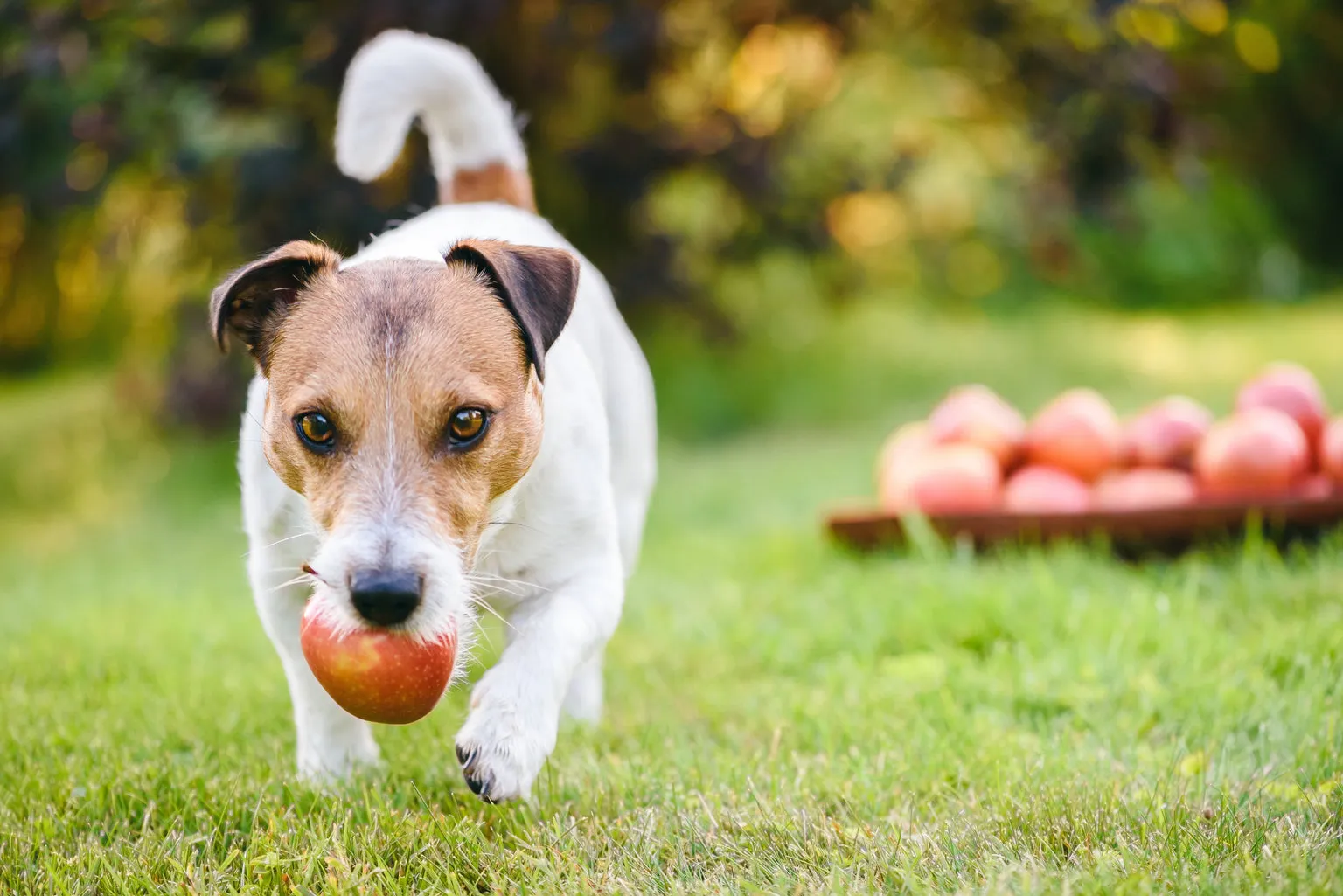
Somewhere along the line, you've probably heard that a crisp apple slice doubles as a toothbrush. It's a tempting idea: A sweet, cheap snack that scrubs your dog's teeth while they chomp.
But does it hold up?
In this article, we run through what apples can and can't do for your dog's mouth, how to serve them safely and where they fit in a dental routine that actually keeps plaque in check.
Spoiler alert: Apples make a great treat. They just make a lousy toothbrush.
Are Apples Good for Dogs' Teeth? The Short Answer
Apples are safe for most dogs and can play a small supporting role in oral care, but they don't clean teeth in any meaningful way.
The crunch of a raw slice may generally wipe away some soft food debris from the chewing surfaces. It won't remove hardened tartar, reach below the gumline or replace brushing and professional cleanings.
So think of apples as a bonus, not a strategy.
Do Apples Clean Dogs' Teeth? What Chewing Really Does
To see why apples fall short, it helps to know what you're up against. Plaque is a soft, sticky film of bacteria that forms on teeth within hours of eating. If it isn't removed within usually 24-48 hours, minerals in saliva harden it into tartar, also called calculus, within days. Once tartar sets in, only a professional cleaning removes it.

When your dog bites into an apple, the fibrous flesh rubs against the crowns of the teeth. That friction may shift a little soft plaque and leftover food. But there are three big limitations:
- Dogs don't chew apples for long. Most dogs crunch a slice two or three times and swallow. Brief contact means minimal cleaning.
- Apples miss the gumline. Periodontal disease tends to start where teeth meet gums and a slice of fruit never makes it way there.
- Apples can't touch tartar. Hardened build-up needs a proper clean, not a snack.
So, do apples clean dogs' teeth? Barely. They're closer to a quick rinse than a real scrub.
What Apples Offer Beyond Teeth
Where apples earn their spot is as a low-calorie, whole-food treat. A medium apple provides fiber, vitamin C, and vitamin A, plus plant compounds called polyphenols.
Swapping a few processed biscuits for apple slices is an easy way to trim treat calories, which matters when more than half of US dogs are overweight or obese.
Apples also make handy enrichment. Frozen slices tucked into a puzzle toy give your dog something to work at on a hot afternoon.
Dogs make their own vitamin C, unlike people, so treat apples as a fun extra rather than a nutritional must.
The Downsides: Sugar, Acid and Sticky Peel
Apples aren't a free pass. Before you hand over the whole fruit, weigh these trade-offs:
- Natural sugar. A medium apple contains roughly 19 grams of sugar. Oral bacteria feed on sugars, so frequent sweet snacks without brushing don't do teeth any favors. Dogs with diabetes or weight issues should only have apples with your vet's approval.
- Acidity. Apples contain malic acid. Occasional slices are fine, but constant grazing on acidic fruit isn't ideal for enamel.
- Stuck peel. Apple skin can lodge between teeth, trapping debris right where you don't want it.
- Seeds and core. Apple seeds contain amygdalin, which can release cyanide when chewed and digested. The core and stem are also a choking and blockage risk.
How to Feed Apples to Your Dog Safely

Want to share your snack the smart way? Follow these steps:
- Wash the apple to remove surface residue.
- Core it completely. Remove all seeds, the stem and the tough center.
- Slice to size. Thin slices or small cubes for small dogs, larger wedges for big dogs, but never whole apples.
- Keep it plain. Skip apple pie, sweetened applesauce, caramel and anything with nutmeg or xylitol.
- Start small and watch for loose stools or tummy upset.
- Follow the 10% rule. Treats, fruit included, should make up no more than 10% of your dog's daily calories.
Check with your vet first if your dog has diabetes, pancreatitis or a sensitive stomach.
Apples vs. Proven Dental Care
If a healthy mouth is the goal, here's how apples stack up against the habits that are the most trustworthy:
Toothbrushing
What it does: Physically removes plaque, including at the gumline.
How often: Daily (gold standard).

VOHC-accepted chews and products
What it does: Tested against plaque or tartar standards removal.
How often: Daily.
Dental powders and water additives
What it does: Support oral hygiene with no brushing required.
How often: Daily.
Professional vet cleaning
What it does: Removes tartar above and below the gumline.
How often: As your vet advises.
Apple slices
What it does: Minimal surface debris removal.
How often: Occasional treat.
If your dog dodges the toothbrush, a meal topper is the easiest daily habit to stick with.
Wuffes Dental Powder sprinkles over your dog's regular food to support fresh breath and healthy teeth and gums. Pair it with brushing when you can and apples when you feel like sharing.
For the bigger picture on what goes in the bowl, see our guide to dental dog food. Curious about other crunchy snacks? Read are carrots good for dog teeth.
FAQs
Can dogs eat apple skin?
Yes, most dogs can eat apple skin safely. The peel holds much of the apple's fiber and many of its plant compounds, so leaving it on adds a little nutritional value. However, skin can get stuck between teeth, trapping food debris along the gumline and it's harder for some dogs to digest.
If your dog has a sensitive stomach, is a small breed, or is prone to loose stools, peel the apple before serving. Always wash the fruit first to remove surface residue. Start with just a few small pieces, watch how your dog handles them and adjust from there.
Are apple seeds toxic to dogs?
Apple seeds contain amygdalin, a compound that can release cyanide when the seeds are crushed or chewed and then digested. A dog who swallows one or two whole seeds is unlikely to have problems, but risk builds with repeated or larger exposure, so remove the seeds every time.
The core poses its own danger as a choking hazard and a potential intestinal blockage, especially for small dogs. If your dog eats a whole apple core or a lot of seeds, call your veterinarian. Watch for vomiting, drooling, trouble breathing, or signs of discomfort and seek care promptly if they appear.
How much apple can a dog eat?
Treats, including fruit, should make up no more than 10% of your dog's daily calories. For most dogs, that means a few thin slices a few times a week, not a whole apple. As a rough guide, a small dog might have one or two slices, a medium dog three or four, and a large dog up to half an apple.
Adjust based on your dog's size, activity level and overall diet. Too much apple can cause diarrhea or stomach upset because of the fiber and sugar. Dogs with diabetes or weight concerns should only have apples with vet approval.
Can puppies eat apples?
Yes, puppies can eat apples in small amounts once they're eating solid food. Cut apples into tiny, seed-free pieces to reduce choking risk and remove the core and stem completely.
Puppy digestive systems are sensitive, so introduce apple slowly, one or two small pieces at a time, and watch for loose stools.
Chilled apple pieces may appeal to teething puppies, but always supervise them closely.
Remember that a growing puppy needs complete, balanced puppy food for proper development, so treats should stay under 10% of daily calories. Ask your veterinarian before adding new foods if your puppy has health issues.
Can apples replace brushing my dog's teeth?
No, apples can't replace regular brushing. Chewing a slice may move a little soft debris from the tooth surface, but it doesn't reach the gumline, where periodontal disease begins, and it can't remove hardened tartar. Daily toothbrushing with dog-safe toothpaste remains the gold standard for home dental care.
If brushing is a struggle, look for products accepted by the Veterinary Oral Health Council, or add a daily dental powder to your dog's meals for easy support. Schedule regular veterinary dental check-ups too, since only a professional cleaning removes tartar.
Think of apples as an occasional treat, not a toothbrush substitute.
To Sum Up
Apples are a safe, low-calorie treat most dogs love, but they're not a dental tool. Their crunch might shift a little surface debris, but it can't reach the gumline or touch tartar. Plus, natural sugar means moderation matters.
Serve apples cored, seedless, and sliced, keep them under 10% of daily calories and let trusted habits like brushing, a daily dental powder and regular vet checkups do the heavy lifting. Your dog gets the crunch. Their teeth get the care.