Dog Broken Tooth: A Complete Guide to Signs, Causes, Treatment, and Recovery
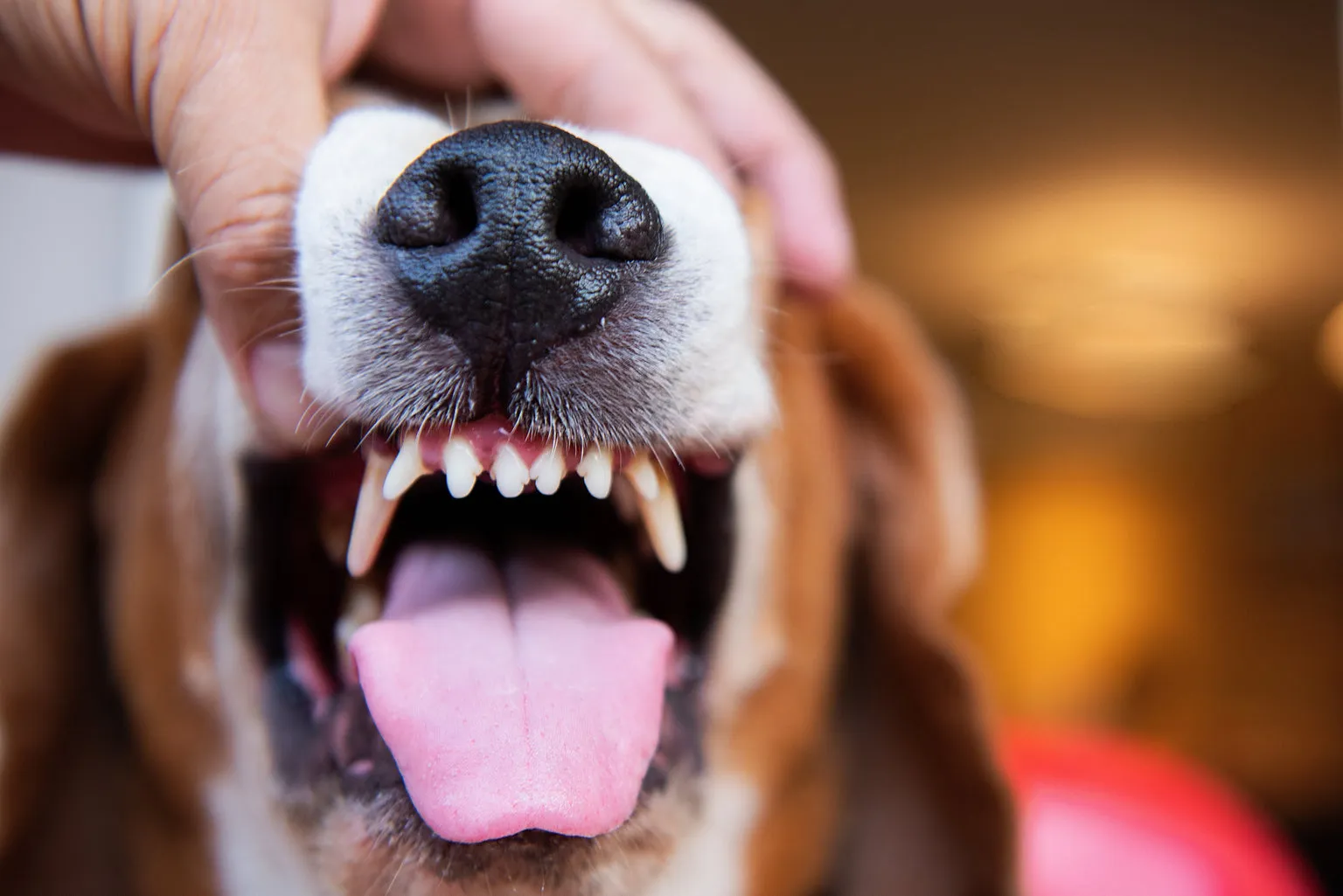
A broken tooth is one of the more common dental injuries in dogs. And, it comes in more forms than most dog people expect – a small chip, a hairline crack, a full fracture or a specific type called a slab fracture.
Some cases are minor; others need prompt treatment. Either way, a vet exam is the only reliable way to know what you're dealing with, because dogs are genetically wired to hide their pain.
This guide covers the different types of tooth damage, what typically causes them, how vets diagnose and treat a broken tooth and what recovery actually looks like.
Is a Broken Dog Tooth an Emergency?
The short answer is that it depends on the type of damage. A vet exam is what determines which category the broken tooth fits into – not how your dog is behaving.

A minor chip with no pulp exposure (the soft, living center of the tooth), is generally not an emergency and can typically be assessed at a routine appointment.
A fracture with visible pulp exposure, ongoing bleeding, facial swelling or a dog that has stopped eating falls into a more urgent category. Because dogs mask pain well, behavior alone isn't a reliable way to tell these apart.
If you're unsure which situation applies to your dog, the most direct step is to contact your vet and describe what you're seeing – they can advise whether it warrants a same-day visit or can wait for a routine appointment.
Types of Dog Tooth Damage: Chip, Crack, Fracture and Slab Fracture
These terms get used loosely, but they describe different levels of damage:
- Chip: A small piece of enamel is missing from the tooth's surface, without necessarily exposing the inner tooth. Often the least serious, but still worth a vet check to confirm the pulp isn't exposed.
- Crack: A visible line in the tooth that hasn't yet caused a piece to break away. Cracks can worsen over time and may or may not expose the pulp.
- Fracture: A broader term covering any break in the tooth structure, from minor to severe, including breaks that expose the pulp (the tooth's nerve and blood supply).
- Slab fracture: A specific type of fracture where a flat "slab" of enamel and dentin breaks away from the side of the tooth – most common on the upper fourth premolar (carnassial tooth), usually from aggressive chewing on hard objects.

The visual difference between these can be subtle and a tooth that looks like a simple chip can still have pulp exposure underneath – which is why a vet exam, not a visual home assessment, is the only reliable way to know what you're dealing with.
What is a Slab Fracture?
A slab fracture is one of the most common tooth injuries in dogs that chew on very hard objects – antlers, bones, hard nylon toys or ice. It specifically affects the carnassial tooth (the large upper premolar dogs use for shearing), where the flat side of the tooth shears off under pressure, often exposing the pulp chamber underneath (the soft, active part of the tooth).
Slab fractures are easy to miss because the rest of the tooth can look structurally intact from the front – the damage is often on the side or back of the tooth. If your dog has been chewing on something notably hard and later shows any change in chewing behavior, drooling or reluctance to eat on one side, a slab fracture is worth ruling out with a vet exam.
My Dog Has a Chipped Tooth But Shows No Pain – Is That Normal?
Yes, and it's one of the more important things to understand about dental injuries in dogs: The absence of visible pain doesn't mean the tooth is fine.
Dogs often continue eating and behaving normally even with a fractured tooth that has exposed the pulp, since showing pain isn't something dogs do as readily or as obviously as people expect.

A tooth with exposed pulp is vulnerable to infection regardless of whether your dog seems bothered by it. Left unaddressed, this can progress to an abscess, which may not become obvious until it's already advanced.
"No pain" is a reason to still get the tooth checked, not a reason to rule out a problem.
Signs Your Dog's Tooth Is Broken
Because dogs hide pain well, the signs are often behavioral rather than obvious visual damage:
- Visible chip, crack or discoloration (a grayish or pink tint can indicate internal damage)
- Chewing only on one side of the mouth, or dropping food
- Pawing at the mouth or face
- Reduced interest in hard chews or toys they previously enjoyed
- Bad breath localized to one side, or visible swelling near a tooth
- Bleeding from the mouth, especially right after a chewing session
Signs worth a prompt visit rather than the next routine checkup:
- Facial swelling
- Visible bleeding
- A dog that suddenly stops eating (see the emergency section above for more on how to think about urgency).
What Causes Broken Teeth in Dogs
Chewing on hard objects
This is the most common cause by a wide margin. Antlers, real bones, hard nylon chews, ice cubes and rocks are frequent culprits – particularly for the carnassial teeth and canines, since these are the teeth dogs use for the most forceful chewing and shearing.

Trauma
A fall, a hit to the face, being struck by a car or rough play with another dog – is the other major cause and can affect any tooth depending on where the impact lands.
Underlying dental disease
This can also play a role, becauuse teeth weakened by advanced periodontal disease or deep decay are more prone to fracturing under normal chewing pressure than healthy teeth. This is one more reason routine dental care matters beyond just fresh breath – it also protects tooth structure itself.
Age and breed factors
Some dogs are aggressive chewers and dogs given inappropriately hard chew items are the group most at risk. A good general rule of thumb is that if a chew item doesn't flex slightly under firm pressure, it's likely too hard to be safe.
Broken Baby Teeth in Puppies: Is It Different?

Puppies can chip or fracture their deciduous (baby) teeth, most often from chewing on hard objects during teething.
A broken baby tooth is generally lower-stakes than an adult tooth fracture, since the tooth will eventually be replaced – but it's still worth a vet check, since infection in a baby tooth can potentially affect the developing adult tooth underneath it.
Puppies are just as capable of masking discomfort as adult dogs, so the "no visible reaction" pattern applies here, too.
Does Location Matter? Canine vs. Molar Fractures
- Canine teeth (the long, pointed "fangs"): These have particularly long roots and a fracture here carries a higher risk of pulp exposure due to the tooth's size and root depth. Canine fractures are also more likely to be visually noticed, since these teeth are prominent.
- Molars, especially the carnassial tooth: This is the classic site for a slab fracture, since it bears the most pressure during hard chewing. Molar fractures are easier to miss since they're further back in the mouth and less visible during a casual look.
Regardless of location, the presence of a fracture – not just its position – is what determines whether treatment is needed. A vet exam accounts for both.
Diagnosis and Treatment Options
A vet typically starts with a physical exam of the tooth and surrounding gum tissue, usually followed by dental X-rays. X-rays matter because they show what's happening below the visible surface – root health, bone involvement and whether the pulp chamber (the soft, active center of the tooth), has been compromised in ways that aren't obvious just by looking.
Depending on what the exam and X-rays show, treatment generally falls into a few categories:
- Monitoring: For a very minor chip with no pulp exposure and healthy surrounding structure, a vet may recommend watching the tooth rather than immediate intervention.
- Bonding or capping: For some chips without pulp exposure, a dental bonding material can restore the tooth's shape and protect the exposed dentin layer.
- Root canal therapy: When the pulp is exposed but the tooth is otherwise structurally sound, a root canal can remove the damaged inner tissue and preserve the tooth itself, avoiding extraction.
- Extraction: When the fracture is too extensive or the tooth's root or supporting structure is significantly compromised, removal is often the most reliable way to eliminate pain and infection risk.
Which option applies depends entirely on the specific case – the extent of the fracture, the tooth's location and the dog's overall dental health all factor in. This is a vet's clinical decision, not something to predict or plan around before the exam.
Aftercare and Recovery
Recovery looks different depending on which treatment path your dog needed, but a few general patterns apply across most cases:
Right after treatment
Dogs are usually a little groggy if anesthesia was used (most dental procedures involving X-rays or extractions require it), and it's normal for eating and drinking to be delayed by several hours as the anesthesia wears off. Your vet will give guidance specific to the procedure performed.
Diet adjustments during healing
Soft or moistened food is commonly recommended for a period after extraction or root canal work, since the surgical site or restored tooth needs time before it can handle normal chewing pressure again. Your vet will advise on when to return to regular food and treats – this varies by procedure and shouldn't be guessed at home.
Activity and chew restrictions
Hard chews, toys and rough play are typically restricted for a period after treatment, both to protect the healing site and to avoid re-injuring a tooth that was just treated (or a neighboring tooth doing extra work while the treated one heals). Reintroducing chew toys too early is one of the more common ways owners inadvertently prolong recovery.
Monitoring for complications
Keep an eye out for continued swelling, discharge, reluctance to eat past the expected recovery window or your dog pawing at their mouth again – any of these are worth flagging to your vet rather than assuming they're normal healing.
Follow-up care
Many treatments, especially root canals and more involved extractions, come with a recommended follow-up visit to confirm healing is on track. Keeping that appointment matters even if your dog seems back to normal, since some complications aren't obvious without a proper exam.
Full recovery timelines vary by procedure and by dog, which is why your vet's specific guidance – rather than a general timeline – should be the one you follow.
How to Help Prevent Broken Teeth
- Avoid very hard chew items – bones, antlers, hard nylon toys and ice are common causes of fractures. A reasonable test: If you can't flex it slightly or dent it with a fingernail, it's likely too hard.
- Choose appropriately sized, vet-recommended chews for your dog's size and chewing strength.
- Supervise chewing sessions with new or harder chew items, especially for aggressive chewers.
- Keep up with regular dental checks, since a vet can spot early wear patterns or dental disease that make fractures more likely and can flag risky chewing habits before an injury happens.
- Address dental disease early. Since weakened teeth from periodontal disease are more prone to fracturing, staying on top of everyday dental care. See our guide to dog dental health.
For more specific details on plaque build-up, check out our guide to removing tartar.
Daily care is really a form of fracture prevention, not just a bad-breath fix.
Prevention here comes down to chew-item choice, supervision and general dental health – no toothpaste, chew or supplement can prevent a fracture caused by biting down on something too hard.
FAQs
Is a broken dog tooth an emergency?
A broken dog tooth isn't always an emergency. It depends on the type and scale of the broken tooth. But, it's not something to leave unaddressed either. A minor chip with no pulp exposure (the living center of the tooth) can typically wait for a routine vet visit.
But a tooth fracture with visible pulp exposure, facial swelling, bleeding or a dog that suddenly stops eating warrants a prompt visit rather than waiting it out. Since dogs hide dental pain well, a vet exam is the only reliable way to know which category a given case falls into. Once you know what the bigger picture is, you can figure out the next steps.
Does a broken tooth hurt a dog, even if they're not showing pain?
A broken dog tooth can hurt for them even if they're not showing it. Dogs are genetically built to not show their pain. And by the time that they do, the state of the pain is usually at an extreme level.
Dogs will usually continue eating and behaving normally even with a fractured tooth that has exposed the pulp (the living center of the tooth), since they don't display pain as easily as people might expect. The absence of visible discomfort doesn't rule out a problem – a vet exam is the only reliable way to confirm whether treatment is needed.
What is a slab fracture in a dog's tooth?
A slab fracture in a dog's tooth is when a flat piece of enamel (the hard, shiny outer layer that covers and protects your teeth) and dentin (the hard, yellow-ish inner layer) shears off the side of a tooth.
The specific tooth it tends to affect are usually the upper fourth premolar (carnassial tooth). This will usually tend to happen as a result of chewing on very hard objects, like antlers or bones. It can be easy to miss the signs, because the damage is usually on the side of the tooth rather than the front side that you can easily see.
Can a dog's broken tooth heal on its own, or does it need to be fixed?
A tooth itself can't heal on its own the way skin does, because enamel and dentin (two of the key parts of the tooth) don't regenerate. So, they're not able to heal. Whether it "needs" treatment really depends on the extent of the damage.
A minor chip without pulp exposure (the soft, living center of a tooth) may just be monitored. When it comes to something like a fracture with exposed pulp, this generally needs treatment (bonding, a root canal, or extraction), because the exposed area won't close up on its own. If left untreated, it could stay vulnerable to infection.
What should I do if my dog breaks or chips a tooth?
If your dog breaks or chips a tooth, the first thing you want to do as a dog owner is to book an appointment to see your vet. It's always worth booking a vet exam, rather than waiting to see how your dog reacts.
Dogs are genetically wired to not show pain, so you'll only see it, maybe subtly when they're experiencing extreme pain, not any sooner. This makes pain an unreliable indicator of severity in dogs. In the meantime, avoid giving hard chews or toys that could worsen the damage and keep an eye out for swelling, bleeding, or a sudden drop in appetite, which would make the visit more time-sensitive.
What does recovery look like after a dog's tooth treatment?
Recovery after a dog's tooth treatment generally involves a period of aftercare. Expect soft food, restricted hard chewing and rough play and monitoring for swelling or discomfort. This period will have usually have a specific timeline and restrictions depending on the procedure that was performed.
A lot of treatments include a follow-up visit to confirm healing is on track, so make sure you can factor this in, too. Your vet's guidance for your dog's specific procedure is the one to follow. Their timeline is specific for a reason. Recommended through experience and extensive knowledge. It's always best to follow this, instead of a general timeline.
What can I do to prevent my dog from breaking a tooth?
The most effective thing you can to do prevent your dog from chipping a tooth is to avoiding very hard chew items. This can include things like bones, antlers, hard nylon toys and ice. They're all some of the most common causes of fractures. There are a few other things you can do, too.
Choose appropriately-sized, softer chew options for your dog's size and chewing strength. You can also supervise chewing sessions with new items, and of course, stay on top of routine dental care. Weak teeth from dental disease can be more prone to fracturing. If you have a good dental care routine, it'll help.
To Sum Up
A broken tooth in a dog can range from a minor chip to a significant fracture and the type of damage – not just whether your dog seems bothered by it.
Dogs hide dental pain well. Diagnosis usually involves X-rays to see what's happening beneath the surface and recovery depends on following your vet's specific aftercare guidance rather than guessing. The best advice would be to avoid overly hard chew items remains the single most effective way to prevent this injury in the first place.