Are Carrots Good for Dogs' Teeth?
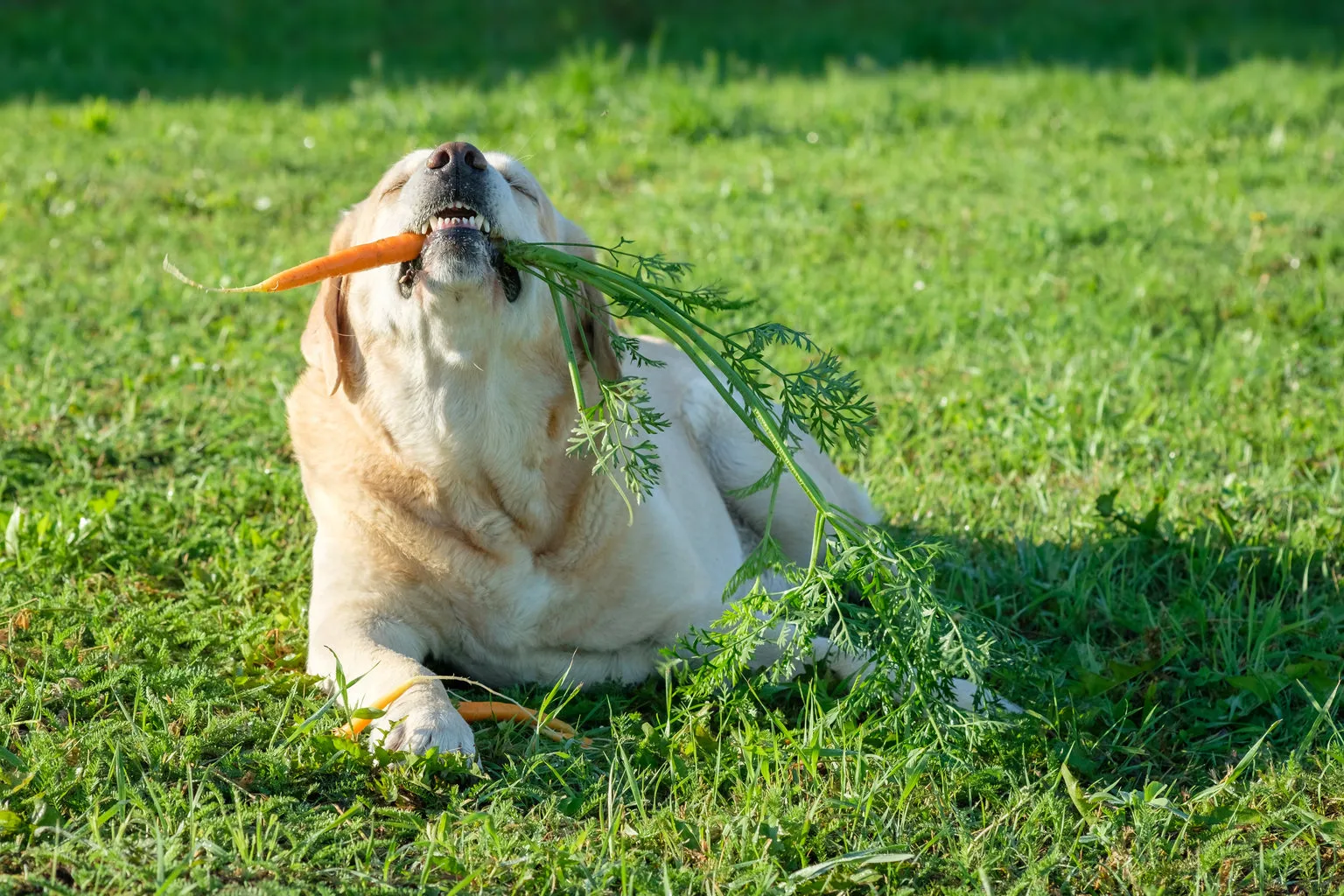
To get straight into it, yes, carrots are good for dogs' teeth. But, only up to a point.
Raw carrots are crunchy, low in calories and make your dog chew, which can end up scraping away a little soft plaque and get saliva flowing.
What they can’t do is replace brushing, remove hardened tartar or clean below the gumline, which is where dental trouble usually starts.
Think of a carrot as a bonus round, not the main event.
Here's what carrots really does for your dog's mouth, where it falls short and how to serve it safely so every crunch counts.
Do Carrots Clean Dogs' Teeth?
A little. When your dog bites into a raw carrot, the firm texture rubs against the tooth surface. That friction can wipe off some of the soft, sticky plaque that builds up between meals. Chewing also boosts saliva, which is your dog's built-in rinse cycle. So it helps wash away food debris.
There's a catch though. Most dogs don't chew carrots very thoroughly. They crunch a couple of times with their back teeth and swallow. The front teeth and canines barely get involved and the gumline gets almost no contact at all.

There's also no real published clinical research showing that carrots reduce plaque or tartar in dogs. Most of the "natural toothbrush" talk you'll see online is based on how carrots feel to chew, not on measured results.
Vets tend to describe them as a healthy snack with a small cleaning bonus and that's the fair way to see them.
So, are carrots good for dogs' teeth in a meaningful way? Think of them like an apple for people. Crunching one after lunch feels fresh, but nobody would swap it for a toothbrush. The same logic applies to your dog.
What Carrots Can Do for Your Dog's Mouth

So, do carrots help dogs' teeth at all? They do, in a few modest ways:
- Gentle scrubbing. Crunchy raw carrot can dislodge fresh, soft plaque from the chewing surfaces of the back teeth.
- More saliva. Chewing gets saliva flowing, which helps rinse the mouth.
- A smarter treat swap. A medium carrot has roughly 25 calories and no added sugar, fat or salt. Swapping it for a starchy biscuit means less sticky residue left on the teeth.
- Something to do. Lots of dogs love the crunch. A carrot keeps them busy and chewing on something safe.
Carrots also bring beta-carotene, fiber, and vitamin K to the bowl. That's a nice nutritional perk, even if it isn't a dental one.
What Carrots Can't Do
This is where the hype runs ahead of reality.
Carrots can't remove tartar
Plaque that isn't cleared away hardens into tartar, often within a few days. Once it's hard, no vegetable is going to budge it. Tartar needs a professional cleaning under general anesthesia at your vet's office.
Carrots can't reach the gumline
Gum disease starts where teeth meet gums. Crunching on a carrot does little in that zone, which is exactly where a toothbrush earns its keep.
Carrots can't replace a routine
Periodontal disease is one of the most common health problems vets see in adult dogs. A daily carrot won't change that picture on its own.
If your dog already has red gums, bad breath, loose teeth or visible brown build-up, carrots aren't the answer. Book a vet check first instead.
How to Serve Carrots for Dog Teeth Safely
Want to get the most out of carrots for dog teeth without the risks? Follow these ground rules:
- Go raw for crunch. Raw carrots give the most chewing action. Cooked carrots are softer and easier to digest, so they suit seniors or dogs with sore mouths, but they offer little scrubbing.
- Size it right. Cut carrots into sticks or coins that match your dog's size. Small dogs and gulpers need smaller pieces to avoid choking. Big dogs may do well with a whole carrot they have to work at.
- Keep it plain. No butter, salt, oil or seasoning. Garlic and onion seasonings are toxic to dogs.
- Watch the portions. Treats, carrots included, should make up no more than about 10% of your dog's daily calories. Carrots contain natural sugar, so dogs with diabetes need a vet's okay first.
- Start slow. Introduce carrots gradually. Too much fiber too fast can upset tummies. You may also spot undigested orange bits in the poop. That's normal.
Where Carrots Fit in a Real Dental Routine

Carrots work best as a supporting player. Here's a routine that actually covers the bases:
- Brushing. Daily brushing with a dog-safe toothpaste is still the gold standard for home dental care.
- Proven chews. Look for dental chews carrying the Veterinary Oral Health Council (VOHC) Seal, which means they've passed plaque or tartar testing.
- Daily add-ins. Some dog people add a dental powder to meals for extra daily support. Curious whether they're worth it? Read our guide on whether dog dental powder is worth it. Wuffes Dental Powder is an easy sprinkle-on option.
- Smarter meals. Diet plays a bigger role than most people think. Our complete guide to dental dog food breaks down which feeding choices support healthy teeth.
- Vet cleanings. Your vet can spot problems early and remove tartar safely.
Add carrots on top of that, and you've got a crunchy, low-cal treat that pulls its weight.
FAQs
Are frozen carrots good for dogs' teeth?
Frozen carrots can be a fun, crunchy chew, and some vets suggest them for teething puppies because the cold, firm texture gives sore gums something satisfying to work on. For adult dogs, freezing adds extra crunch and makes the carrot last longer, which means more chewing time.
That said, freezing doesn't turn a carrot into a toothbrush. It still won't clear tartar or clean the gumline. Frozen carrots are also very hard, so watch for aggressive chewers who might crack a tooth. Try thinner sticks or coins rather than whole frozen carrots and always stay close and supervise chewing sessions.
How many carrots can a dog eat a day?
It depends on your dog's size, calorie needs and overall diet. As a rule of thumb, treats, carrots included, should stay under about 10% of your dog's daily calories. For a small dog, that might mean a few baby carrots or a handful of coins.
A large dog may handle one or two whole carrots. Carrots are low in calories but contain natural sugar and plenty of fiber, so too many can cause gas or loose stools. Start with just a small amount, watch how your dog's tummy reacts and check with your vet first if your dog has diabetes.
Can carrots replace brushing my dog's teeth?
No. Carrots can scrape a little soft plaque off the chewing surfaces of your dog's back teeth, but they can't reach the gumline, where plaque builds up and gum problems begin. A toothbrush, by contrast, cleans every surface, including the front teeth and canines that most dogs barely use when crunching carrots.
Daily brushing with a dog-safe toothpaste remains the most effective home care option. If your dog won't tolerate brushing, ask your vet about VOHC-accepted chews, water additives, or other daily options. Carrots are a nice, crunchy extra on top of that daily routine, not a replacement for it.
Are raw or cooked carrots better for dogs' teeth?
Raw carrots are better for teeth because they're firm and crunchy, so your dog has to chew to break them down. That chewing action is what creates the small scrubbing effect. Cooked carrots are soft, so they offer very little mechanical cleaning.
However, cooked carrots are easier to digest and gentler on older dogs, dogs with missing teeth, or dogs with sore mouths. If you're cooking carrots, steam or boil them plain, with no butter, oil, salt, or seasoning. Both versions are safe and nutritious. Choose raw for crunch and cooked for comfort, depending on what your dog needs most.
Are carrots safe for teething puppies?
Yes, most puppies can enjoy carrots, and many love chewing on them while their adult teeth come in. Cold or frozen carrot pieces can give teething puppies something safe and satisfying to gnaw on. Keep pieces large enough that your puppy can't swallow them whole, but not so hard that they strain developing teeth.
Always supervise, since puppies tend to gulp. Introduce carrots slowly, because a young digestive system can react to new foods with gas or loose stools. Remember that carrots count toward daily treat calories, so balance them against the complete puppy food your pup needs to grow.
To Sum Up
Are carrots good for dogs' teeth? Yes, as a healthy snack with a small cleaning bonus. Raw carrots can scrape away some soft plaque and boost saliva and they make a great low-calorie swap for starchy treats.
But they can't remove tartar, reach the gumline, or replace brushing and vet care. Serve them raw, plain, and in the right size, and let them back up a real dental routine rather than stand in for one.