Large Breed Dogs and Joint Problems: What Dog People Need to Know
Large breed dogs are significantly more prone to joint problems than smaller breeds. This guide covers why some breeds are most at risk, signs to spot and more.
Large breed dogs are more likely to develop joint problems than small dogs, it just is what it is. These kinds of problems tend to appear earlier and progress over time.
It usually comes down to three things: more bodyweight loading every joint, a fast growth curve in puppyhood, and inherited conditions like hip and elbow dysplasia.
If you've got a Lab, a Shepherd, or a Great Dane, it's not a cause for panic. It's cause for being a little more aware. Big dogs are stoic. They usually keep going long after a joint starts bothering them, so the early signs are easy to miss.
Here's what's behind joint issues in larger dog breeds, which breeds carry the most risk, and what to watch out for.
Why Large Breeds Are More Vulnerable to Joint Problems
Large breeds face three overlapping pressures that small dogs mostly avoid.
- Bodyweight. Every step sends force through the hips, elbows, knees, and shoulders. A 100-pound dog puts far more load on its cartilage than a 15-pound dog, and that load adds up over years of walks, jumps, and zoomies.
- Rapid growth. Large breed puppies usually do most of their growing in the first 12 to 18 months. Bones, cartilage, and growth plates develop under constant strain, and growing too fast can disrupt how joints form.
- Genetics. Hip and elbow dysplasia are inherited, developmental conditions. They're far more common in large and giant breeds, which is why responsible breeders screen parent dogs before breeding.
The Most Common Joint Conditions in Large Breeds

Four conditions account for most joint problems in large dogs. Only a vet can diagnose them.
- Hip dysplasia: The ball and socket of the hip don't fit together properly, so the joint loosens and wears unevenly.
- Elbow dysplasia: An umbrella term for several developmental abnormalities in the elbow, affecting the front legs.
- Osteoarthritis: Gradual breakdown of the cartilage that cushions a joint, leading to stiffness and reduced mobility. It often follows the conditions above.
- Osteochondrosis: A disruption in how cartilage turns into bone during growth, which can leave a loose flap of cartilage in the joint (osteochondritis dissecans, or OCD). It most often affects the shoulder, elbow, knee, or hock.
Hip dysplasia
Most commonly seen in: German Shepherds, Labradors, Golden Retrievers, Saint Bernards and Mastiffs.
Typical age of onset: 4–12 months: some dogs show signs only in middle age as arthritis develops.
Elbow dysplasia
Most commonly seen in: Labradors, Golden Retrievers, Rottweilers and German Shepherds.
Typical age of onset: 4–12 months.
Osteochondrosis
Most commonly seen in: Fast-growing large and giant breeds, including Great Danes, Rottweilers and Labradors.
Typical age of onset: 4–8 months.
Osteoarthritis
Most commonly seen in: All large breeds, especially dogs with dysplasia.
Typical age of onset: Most common in middle-aged and senior dogs; earlier when another joint condition is present.
Which Breeds Are at Highest Risk?
Any large breed can develop joint problems, but these seven are among those vets see most often.
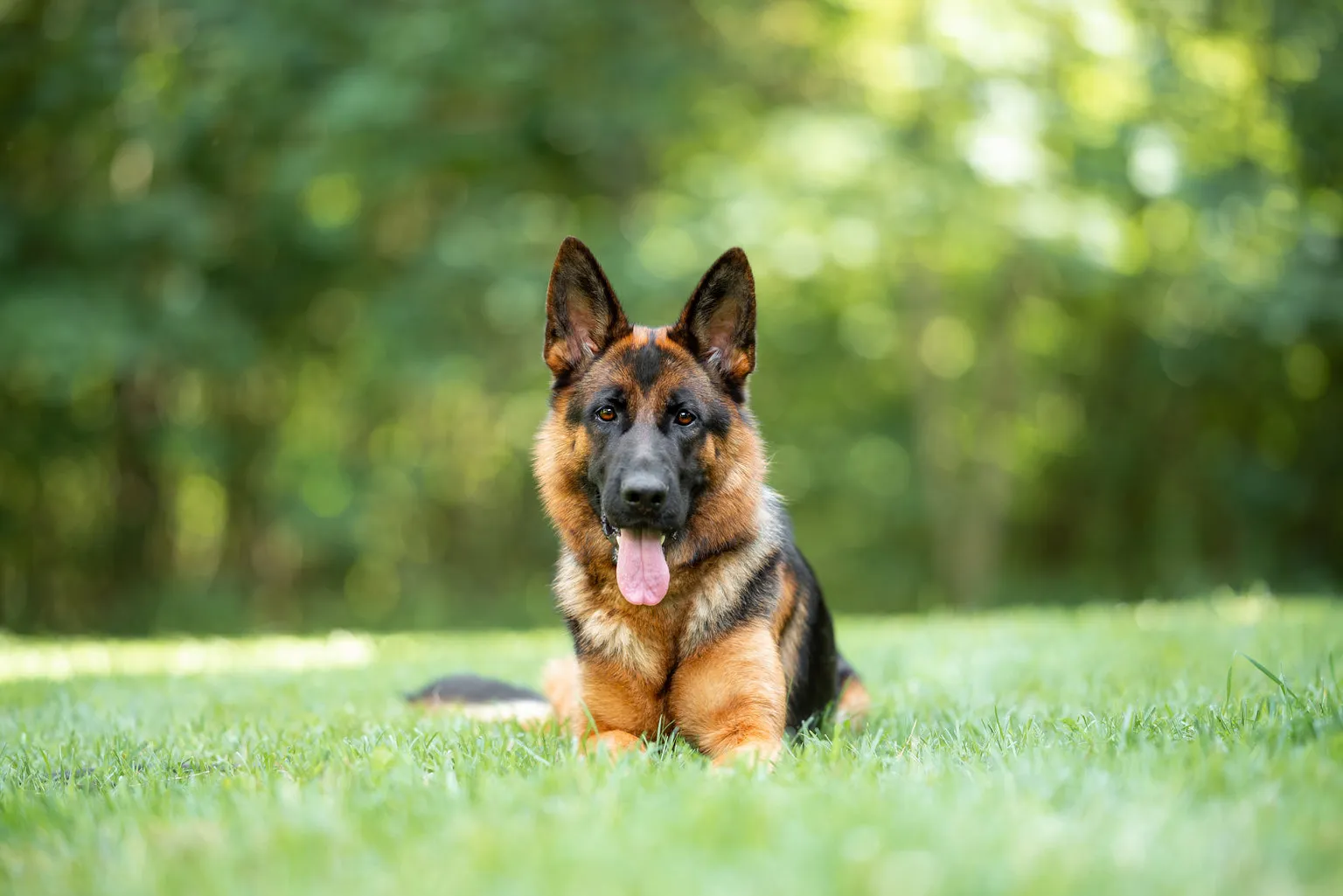
German Shepherd
Key joint concern: Hip and elbow dysplasia.
Labrador Retriever
Key joint concern: Elbow and hip dysplasia and cranial cruciate ligament (CCL) injury.
Golden Retriever
Key joint concern: Hip and elbow dysplasia.
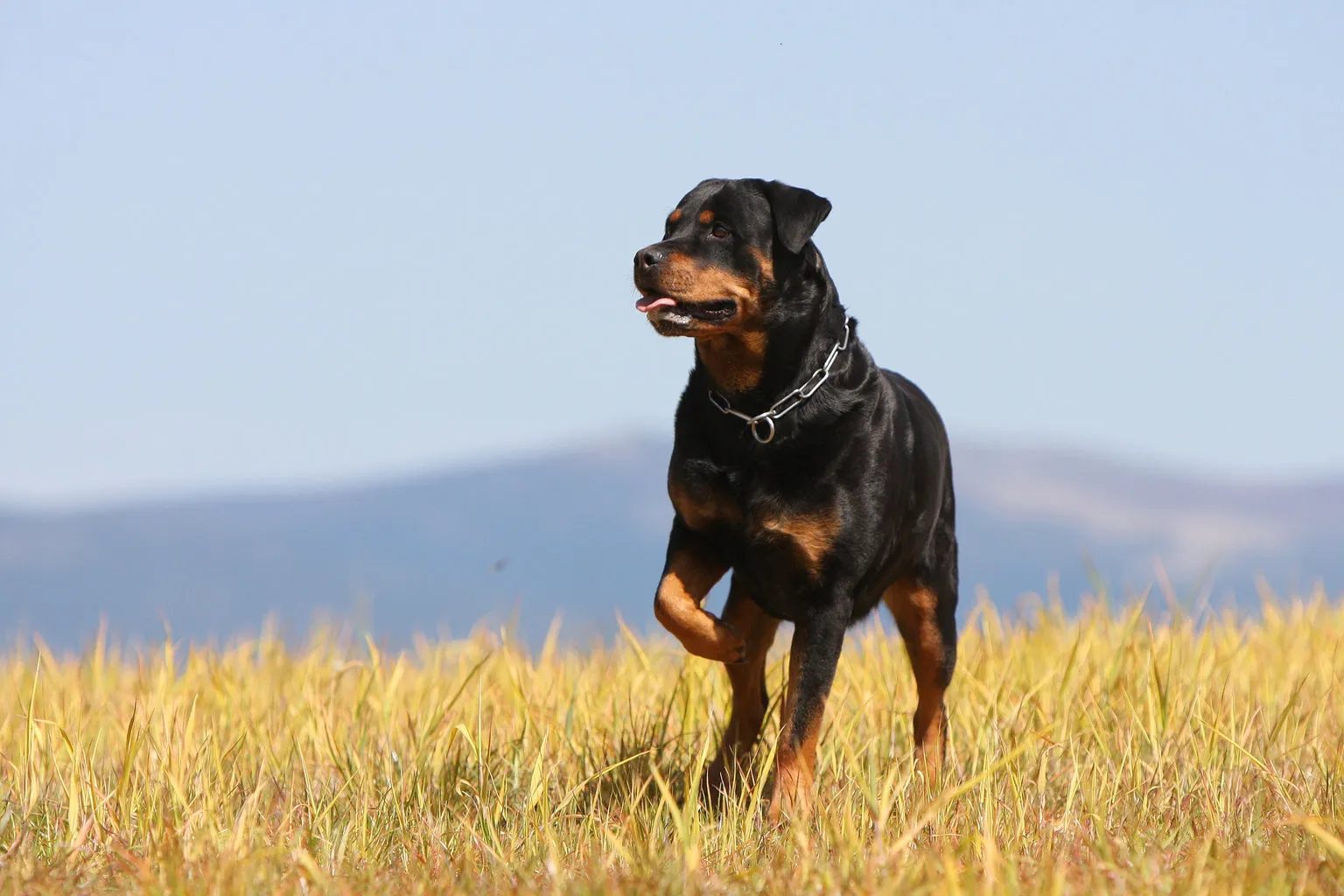
Rottweiler
Key joint concern: Elbow dysplasia, osteochondrosis and CCL injury.
Great Dane
Key joint concern: Growth-related bone and joint conditions and hip dysplasia.
Saint Bernard
Key joint concern: Hip and elbow dysplasia.
Mastiff
Key joint concern: Hip and elbow dysplasia and CCL injury.
Signs of Joint Problems in Large Breed Dogs

Joint problems in large dogs usually start subtly. Big dogs tend to mask discomfort, so small, persistent changes matter more than one off day. Here's what you can look out for:
- Gait changes: Limping, a shorter stride, a "bunny-hopping" run with both back legs moving together, or swaying hips.
- Reluctance to move: Hesitating at stairs, the car, or the couch, or cutting walks short.
- Stiffness after rest: Getting up slowly after sleep, then loosening as they warm up.
- Muscle loss: Thinning muscle over the hindquarters and thighs as your dog shifts weight forward.
- Postural changes: Sitting with a leg kicked out to the side, standing with back feet tucked under, or lying down more than usual.
When to Talk to a Vet
Book a vet visit if any sign above lasts more than a few days, keeps coming back, or gets worse. Don't wait for a dramatic limp.
Call your vet immediately if your dog:
- Won't put weight on a leg.
- Cries out when moving, or has a joint that looks swollen or feels warm.
- Suddenly struggles to stand or climb stairs.
- Is a large breed puppy limping during growth.
For puppies, ask your vet about hip and elbow screening. Earlier answers usually mean more options.
How Joint Health Is Typically Supported in Large Breeds
Joint health in large breeds is usually supported through a combination of approaches, not one fix. Your vet can help you decide what fits your dog.
- Weight management: Keeping your dog lean is the most impactful thing you control.
- Appropriate exercise: Regular, low-impact activity like leash walks and swimming maintains the muscle that stabilizes joints. Puppies do better with short, varied play than long runs or repetitive jumping.
- Environmental changes: Ramps, rugs or non-slip mats on hard floors, and supportive orthopedic beds reduce everyday strain.
- Nutritional support: Large breed puppy foods with controlled calories and calcium support steady growth. For adult dogs, common joint-support ingredients include Glucosamine, Chondroitin, Omega-3 fatty acids (EPA and DHA), Green-Lipped Mussels, and Collagen.
FAQs
At what age do large breed dogs typically start showing joint problems?
It depends on the condition. Developmental problems like hip dysplasia, elbow dysplasia, and osteochondrosis often show their first signs between 4 and 12 months of age, while a large breed puppy is still growing rapidly. Some dogs with mild dysplasia show no obvious signs until middle age, when arthritis begins to develop.
Osteoarthritis itself is most common in middle-aged and senior dogs, but it can start earlier in dogs with an underlying joint problem. Because large breeds often hide discomfort, dog parents may notice subtle changes, like stiffness after naps or reluctance on stairs, long before an obvious limp ever appears.
Do large breed puppies need joint support?
Large breed puppies need joint-friendly care more than they need extra products. The biggest factors are a complete large breed puppy food with controlled calories and calcium, a lean body condition, and sensible exercise that avoids repetitive high-impact activity while growth plates are still developing. Over-supplementing calcium, for example, can actually interfere with healthy bone development.
Many joint supplements are formulated for adult dogs, so check the label carefully and ask your vet before adding anything during growth. If your puppy comes from parents with screened hips and elbows, that's a really helpful head start, but it isn't a guarantee.
Is it normal for a large dog to slow down with age?
Some slowing down is a normal part of aging. Senior dogs often sleep more, play for shorter stretches, and prefer gentler walks. But stiffness, limping, trouble rising, or avoiding stairs aren't just "getting old," and they deserve a closer look. In large breeds, these changes often point to joint discomfort, most commonly osteoarthritis.
The difference matters because joint problems can usually be managed, and dogs often become noticeably more active and playful once their comfort improves. If your dog's slowdown seems sudden, uneven between legs, or is affecting daily activities, talk to your vet rather than assuming it's simply age.
Can joint problems in large breeds be prevented?
Not entirely, because genetics play a major role. Hip and elbow dysplasia are inherited, so choosing a puppy from parents screened through programs like OFA or PennHIP is one of the most effective ways to lower risk. After that, dog people have real influence.
Keeping your dog lean, feeding a large breed puppy diet during growth, limiting repetitive high-impact exercise while young, and building muscle through regular low-impact activity all reduce strain on developing and aging joints. Ask your vet about timings and details.
To Sum Up
Large breed dogs and joint problems often go hand in hand, but risk isn't destiny. That's important to keep in mind. Knowing your breed's weak spots, keeping your dog lean, and catching subtle changes early all make a real difference.
If something seems off, talk to your vet. Small adjustments now can mean more comfortable miles together later.