The Power of Green-Lipped Mussels
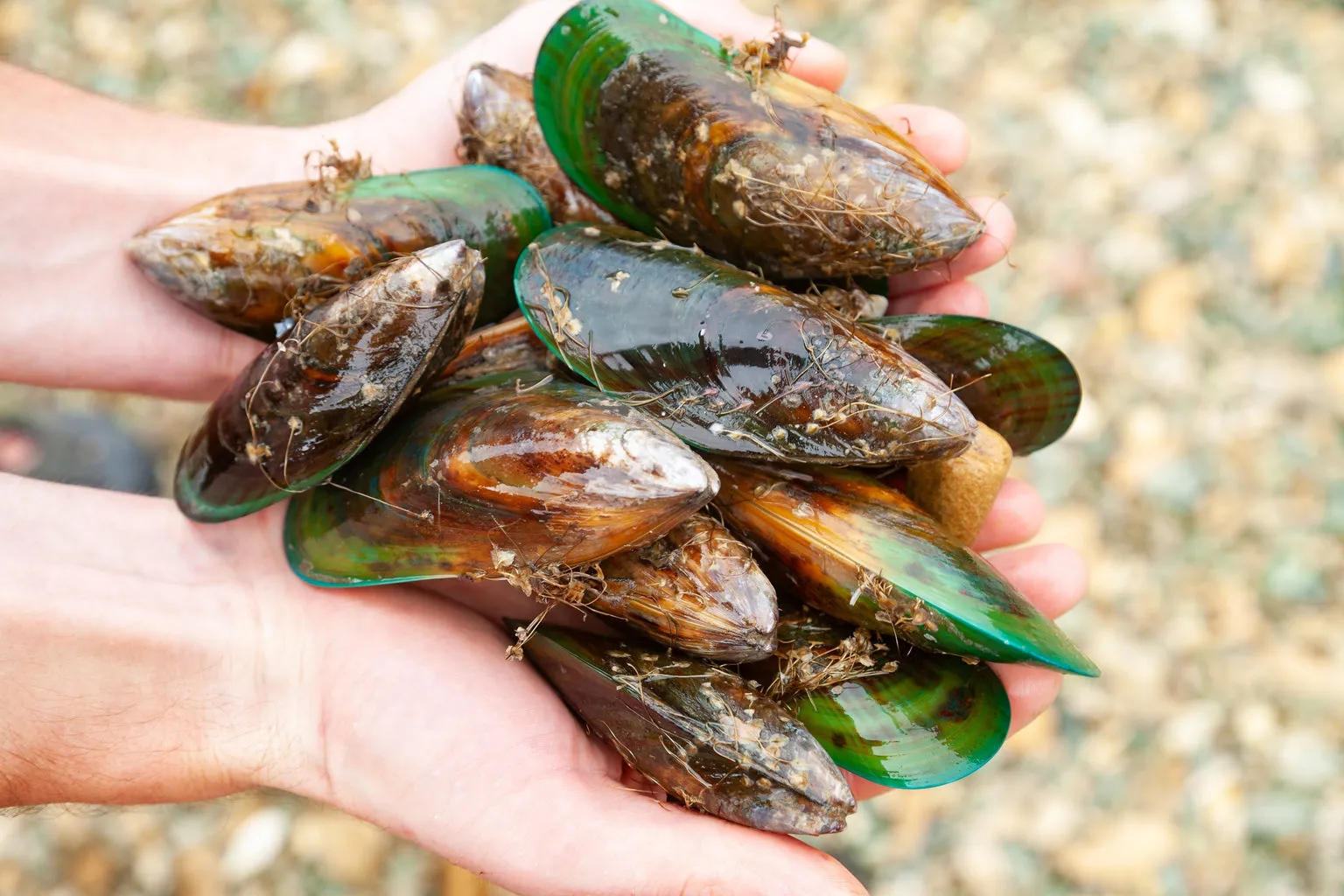
If you've started researching joint health supplements for your dog, chances are you've come across green-lipped mussels.
This ingredient has become one of the most talked-about additions to canine supplements – and for good reason.
Unlike a lot of trendy ingredients that outpace the science behind them, green-lipped mussels have a growing body of research supporting their role in joint health, mobility, and discomfort management in dogs.
This guide covers everything you need to know. What green-lipped mussels are, what they contain that makes them biologically interesting, how they work in the body and what to consider before adding them to your dog's routine.
What Are Green-Lipped Mussels?
Green-lipped mussels (Perna canaliculus) are a species of shellfish native to the coastal waters of New Zealand. They get their name from the distinctive green coloring along the outer edge of their shell – a feature you won't find in common Atlantic or Pacific mussel species.
New Zealand's strict marine environment regulations have helped preserve the pristine coastal waters where these mussels are farmed, which matters for supplement quality. Green-lipped mussels are filter feeders, meaning they draw nutrients directly from the surrounding seawater.
The cold, mineral-rich waters off New Zealand's coastline produce mussels with a particularly dense nutritional profile.

Today, green-lipped mussel (often abbreviated as GLM) is one of the most extensively studied marine-derived ingredients in the joint supplement category.
It is used in supplements for both humans and animals, though its application in dogs has grown significantly as pet owners seek natural, evidence-based alternatives to pharmaceuticals.
What Do Green-Lipped Mussels Contain That Make Them Special?
The reason green-lipped mussels attract scientific attention isn't any single compound – it's the combination of bioactive nutrients found together in a naturally occurring, whole-food source. Here's what makes GLM nutritionally distinct:
Omega-3 Fatty Acids — Including a Rare Type
Green-lipped mussels contain omega-3 fatty acids, including EPA (eicosapentaenoic acid) and DHA (docosahexaenoic acid), which are also found in fish oil. But, GLM also contains a less common omega-3 called ETA – eicosatetraenoic acid.
ETA is found in very few natural food sources, and research suggests it may inhibit certain enzymes involved in the inflammatory cascade more selectively than EPA alone.
This makes the omega-3 profile of green-lipped mussels meaningfully different from standard fish oil, not just a marine oil alternative.
Glycosaminoglycans
GLM is a natural source of glycosaminoglycans (GAGs), including chondroitin sulfate – the same compound commonly included in joint supplements in its isolated form.
In green-lipped mussels, these GAGs occur alongside other supportive compounds rather than as a standalone extract. Chondroitin plays a structural role in cartilage, helping it retain water and maintain its cushioning function between bones.

Proteins and Amino Acids
Green-lipped mussels are a complete protein source, providing all essential amino acids. While this is not unique to GLM, the presence of proteins and structural peptides contributes to the ingredient's overall biological activity.
Vitamins and Minerals
GLM contains zinc, copper, selenium and several B vitamins, including B12. These micronutrients support a range of physiological functions beyond joint health, including immune response and nervous system function.
Antioxidants
Green-lipped mussels contain antioxidants, including natural carotenoids and vitamin E, which help neutralize free radicals. Oxidative stress plays a role in joint tissue degradation, so antioxidant activity it's helpful for joint issues.
What's particularly important for supplement science is that these compounds appear to work synergistically in their natural form.
This is why whole GLM extract is generally considered more biologically effective than isolating any single component from the mussel.
How Do Green-Lipped Mussels Support Joint Health?
The joint health benefits of green-lipped mussels in dogs operate through several complementary mechanisms.
Reducing Discomfort in Joint Tissue
Chronic joint conditions in dogs – including osteoarthritis and hip dysplasia – involve persistent low-grade inflammation in and around the joint.
The omega-3 fatty acids in GLM, particularly ETA and EPA, influence the production of eicosanoids. They are signaling molecules that regulate the inflammatory response.
By shifting the balance toward less inflammatory eicosanoid production, GLM may help reduce the inflammatory environment that accelerates cartilage breakdown and causes discomfort.
Supporting Cartilage Structure
Cartilage is the smooth connective tissue that covers the ends of bones within a joint. It has no blood supply, which means it relies on the synovial fluid in the joint for nutrition and waste removal.
Once cartilage is damaged, the body's capacity to repair it is limited. The glycosaminoglycans in green-lipped mussels – particularly chondroitin sulfate – are structural components of cartilage that support its integrity and water retention capacity.
Regular supplementation provides the building blocks that cartilage needs to maintain its structure under daily stress.
Maintaining Synovial Fluid
Synovial fluid is the lubricating fluid inside the joint capsule. It acts like a shock absorber and reduces friction during movement. Glycosaminoglycans play a role in maintaining the viscosity and volume of synovial fluid.
Dogs with joint degeneration often have thinner, less effective synovial fluid, which contributes to stiffness and discomfort – particularly after rest. By supporting GAG levels, GLM supplementation may help maintain more effective joint lubrication.
Slowing Degenerative Progression
Perhaps the most compelling case for GLM is its potential role in slowing the progression of joint degeneration rather than merely managing symptoms.
The anti-inflammatory and structural support mechanisms described above may work together to protect cartilage from further breakdown over time, making green-lipped mussel supplementation most valuable as a long-term, preventive measure rather than a short-term fix.
This is why many veterinarians recommend beginning joint supplementation before significant symptoms appear – especially in breeds genetically predisposed to hip and elbow dysplasia, such as German Shepherds, Labrador Retrievers, Golden Retrievers and Rottweilers.

What Should I Consider When Starting Green-Lipped Mussel Supplementation?
If you're thinking about adding a green-lipped mussel supplement to your dog's routine, there are several practical factors worth understanding before you begin.
Form Matters: Powder vs. Dried Whole Mussel vs. Oil Extract
Green-lipped mussel supplements come in a few different forms and the form affects both potency and palatability. Freeze-dried whole mussel powder preserves more of the bioactive compounds – including the heat-sensitive lipid fractions – compared to heat-processed alternatives.
Green-lipped mussel oil extract is highly concentrated but may not retain the full glycosaminoglycan content. Whole dried mussels are palatable for most dogs but vary in potency.
Look for products that specify how the GLM was processed and at what temperature.
Amount and Consistency
Green-lipped mussel is not a fast-acting pain reliever. Consistency is the key variable – intermittent supplementation is unlikely to produce meaningful results.
Follow the directions for use on the supplement you choose, which is typically based on your dog's body weight and commit to a full 8-week trial before evaluating the outcome.
Shellfish Allergy Considerations
Green-lipped mussels are shellfish, so dogs with known shellfish allergies should not be given GLM supplements. This is uncommon in dogs but worth confirming with your veterinarian if your dog has a history of food allergies or sensitivities.
Quality and Sourcing
Not all green-lipped mussel supplements are equal. The quality of the raw ingredient, the harvesting location, the processing method and the storage conditions all affect the bioactive potency of the final product.
Look for supplements that source GLM from New Zealand (the species native habitat), use third-party testing and are produced in facilities that meet recognized quality standards such as NASC (National Animal Supplement Council) compliance.
Speak With Your Veterinarian
Particularly if your dog is already taking NSAIDs or other medications for joint discomfort, consult your veterinarian before adding any new supplement.
GLM's omega-3 content means it has mild blood-thinning properties – not a concern in isolation for most dogs, but it's usually relevant if your dog is on anticoagulant therapy or approaching surgery.
Starting at the Right Life Stage
Dogs don't need to be senior or visibly arthritic to benefit from joint support. Large and giant breeds that are predisposed to joint issues may benefit from supplementation beginning in early adulthood, before clinical signs appear.
If your dog is already showing stiffness, reluctance to climb stairs, or reduced activity levels, supplementation combined with veterinary guidance is the appropriate starting point.
FAQs
Are green-lipped mussels good for dogs with arthritis?
Green-lipped mussels are one of the most well-researched natural supplements for dogs with arthritis. They contain omega-3 fatty acids – including the rare ETA – and glycosaminoglycans like chondroitin sulfate, which together help reduce joint inflammation and support cartilage integrity.
Multiple peer-reviewed studies have shown meaningful improvements in pain scores and mobility in arthritic dogs given GLM supplementation over 8–12 weeks.
While they are not a replacement for veterinary diagnosis and treatment, green-lipped mussels are widely recommended as a complementary joint health tool and many veterinarians include them in their management plans for dogs with osteoarthritis.
How long does it take for green-lipped mussels to work in dogs?
Green-lipped mussels are not a fast-acting anti-inflammatory in the way NSAIDs are.
Some dogs may show subtle improvements in comfort and movement within 4–6 weeks, while others – particularly those with more advanced joint degeneration – may take longer.
Consistency is critical. Skipping a supplement or stopping and restarting will interrupt the cumulative effects. Give the supplement a full 8-week trial at the correct dosage for your dog's weight before assessing whether it's working.
Can I give my dog green-lipped mussels every day?
Yes, green-lipped mussel supplements are designed for daily use and are generally considered safe for long-term supplementation in dogs when given at the correct dose.
Unlike pharmaceutical pain relievers, GLM does not carry the same risks of gastrointestinal damage or organ stress with extended use.
Daily supplementation is actually important for achieving and maintaining the anti-inflammatory and structural support benefits, as these rely on a sustained level of the active compounds in the body.
Always follow the feeding guidance specific to the product you're using, which is typically based on your dog's body weight.
Are green-lipped mussels better than fish oil for dogs?
Green-lipped mussels and fish oil are both omega-3 sources, but they are not identical. GLM contains a unique omega-3 called ETA (eicosatetraenoic acid) that is not present in standard fish oil and may offer additional anti-inflammatory benefits.
GLM also provides glycosaminoglycans and other joint-specific nutrients that fish oil does not contain, making it a more targeted option for joint health specifically. Fish oil provides higher concentrations of EPA and DHA per dose and may be more cost-effective for general omega-3 supplementation.
For dogs with joint concerns specifically, green-lipped mussel offers a broader range of supportive compounds that fish oil alone cannot replicate.
What are the side effects of green-lipped mussels in dogs?
Green-lipped mussels are well tolerated by the majority of dogs and have a strong safety profile in the majority of published research.
The most commonly reported side effects are mild and gastrointestinal in nature – occasional loose stools or digestive upset, particularly when first introducing the supplement or when given without food. These effects are usually temporary.
Dogs with shellfish allergies should not be given GLM, as the mussel is a shellfish.
Additionally, because green-lipped mussel oil contains omega-3 fatty acids with mild anticoagulant properties, speak with your veterinarian if your dog is on blood-thinning medication or scheduled for surgery. With appropriate amounts, serious side effects are usually rare.
To Sum Up
For dogs dealing with arthritis, stiffness, or age-related mobility decline, green-lipped mussels offers a well-tolerated, evidence-based option that works best as a long-term commitment rather than a quick fix.
Whether you're supporting an older dog through the challenges of joint degeneration or getting ahead of the issue in a breed prone to hip and elbow problems, green-lipped mussels are worth understanding – and, in most cases, worth trying.