
If your dog's gums look pale pink, white, or grayish instead of their usual bubblegum pink, don't wait it out.
Pale gums are one of the few color changes in a dog's mouth that can point to something serious, so it's always best to ask your vet for the right diagnosis and advice.
Most of the time, a quick look at the color, plus a simple at-home test, will tell you whether you're dealing with a genuine emergency or something to monitor and mention at your dog's next checkup. But, here's how to tell the difference...
What Healthy Dog Gums Actually Look Like
Healthy dog gums are usually a rich bubblegum pink – similar to the inside of your own lower lip. But having said that, "normal" varies more between dogs than most dog people expect.

Normal gums signs broken down by specific factors:
- Breed pigmentation: Chow Chows, Shar-Peis and other breeds with naturally dark or spotted mouths can have partially black or blue-black gums as their baseline – not a health issue.
- Individual variation: Even within a breed, gum tone ranges from pale pink to deep coral depending on the dog.
- Puppies vs. adults: Puppy gums can look slightly lighter until adult teeth and full circulation patterns settle in.
It's important to know that there isn't one image of healthy – it's whatever is normal for your dog. So, if they're a Chow Chow or a puppy, for example, you know that their version of normal will be different to an adult that's not that specific breed.
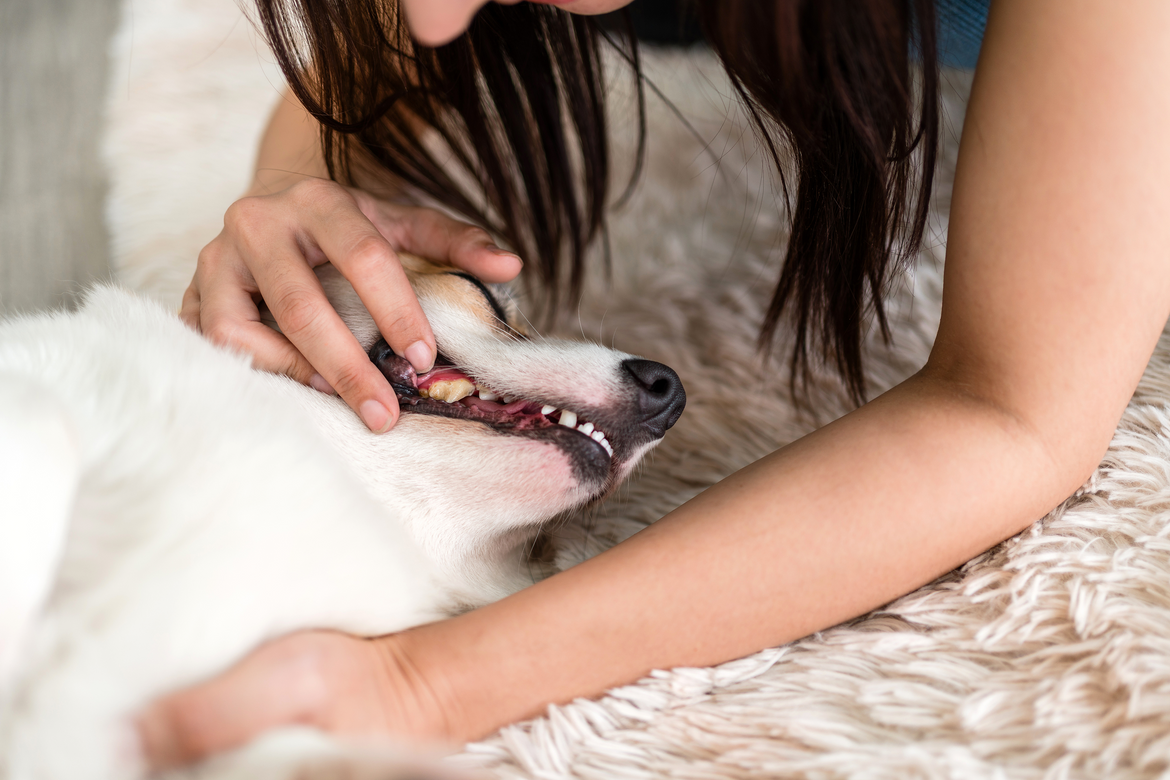
To get a general health on their gums, look when they're healthy. How exactly? Just lift the lip along the upper canine teeth. So when you come to compare healthy vs something new and unusual, you've got a better idea of what's going on.
What Pale or White Gums Can Mean
When gum color visibly drops from healthy pink toward pale pink, white or grayish, it usually reflects one of a few underlying issues below – but, it's always best to check with your vet instead of assuming.
The common situations
- Anemia – a drop in circulating red blood cells, which can result from internal parasites (like hookworms, especially in puppies), chronic disease or bone marrow issues.
- Blood loss – from an injury, internal bleeding or a clotting problem.
- Shock – the body redirecting blood flow away from the gums and extremities toward vital organs.
- Poor circulation or low blood pressure – sometimes tied to heart or vascular issues.
- Extreme cold or hypothermia – blood vessels constrict, temporarily reducing color in the gums.
None of these are things to self-diagnose from gum color alone – pale gums are a signal to act on, not a diagnosis in themselves. It's always best to consult your vet.
How to Check Your Dog's Gum Color and Capillary Refill Time

This two-minute check gives you (and your vet, over the phone) useful information fast:
- Gently lift your dog's lip along the upper gumline, ideally near the canine teeth.
- Look at the color. Compare it to what you know is normal for your dog.
- Run a capillary refill time (CRT) test: press a finger firmly against the gum for one to two seconds, then release. In a dog with normal circulation, the color should return within about two seconds.
- Time it if you can – even roughly. "It didn't come back" versus "it took about four seconds" is genuinely useful information for a vet triaging a phone call.
- Note anything else unusual – lethargy, weakness, rapid breathing, vomiting or a distended abdomen alongside the pale gums.
When Pale Gums Are an Emergency

It's usually a good idea to contact your vet or an emergency animal hospital immediately if pale or white gums show up along with any of the following:
- Collapse, weakness or extreme lethargy.
- Rapid or labored breathing.
- Vomiting blood, or blood in stool.
- A visibly swollen or painful abdomen.
- Known exposure to rat poison or other toxins.
- A recent injury or trauma.
Even without those signs, gums that are consistently pale – not just pale in one quick look – warrant a same-week vet visit. This is genuinely one of those "better safe than sorry" situations. For the most part, gum color is one of the fastest visible indicators of what's happening with a dog's blood and circulation.
Pale Gums vs. Other Gum Color Changes
Pale and white gums aren't the only color change worth knowing about, and it's easy to mix them up:
- Red, swollen gums are usually about local inflammation – most often early gum disease. If that's what you're seeing, our guide to inflamed and swollen gums in dogs covers causes and next steps.
- Bleeding gums (visible blood, especially around the teeth) point to a different set of causes than pallor alone.
- Blue or grayish-blue gums can indicate a lack of oxygen and are always an emergency.
- Yellow-tinged gums can point to liver issues and are worth a prompt vet call.
Pale gums specifically point toward blood volume or circulation – that's what separates this from the redness or bleeding scenarios above.
Supporting Your Dog's Gum Health Day to Day
Gum color problems like gum paleness are usually about what's happening inside your dog's body, not what's happening on the surface of the gums – so no oral product changes gum pallor itself. What daily oral care does support is the overall health of the gum tissue, which matters for your dog's broader wellbeing.

FAQs
What causes pale gums in dogs?
Pale gums usually mean reduced blood flow or a drop in red blood cells reaching the gum tissue. The most common causes are anemia (often from internal parasites, chronic illness or blood loss), shock, poor circulation or exposure to extreme cold. Anemia specifically can develop gradually, from ongoing blood loss or disease, or suddenly, from trauma or toxin exposure.
Because pale gums in dogs can reflect several different underlying conditions, color alone won't tell you which one you're dealing with. If you notice a shift from your dog's normal pink gum color, the right next step is a same-week veterinary visit for bloodwork and a physical exam, sooner if other symptoms appear.
Are pale gums in dogs always an emergency?
Not always, but pale gums in dogs should never be ignored. If pale gums appear alongside collapse, weakness, rapid breathing, vomiting blood, a swollen abdomen or known trauma or toxin exposure, it's an emergency – go to a vet or emergency clinic immediately.
Without those additional symptoms, consistently pale gums still need a prompt, same-week vet visit rather than a wait-and-see approach, because underlying causes like anemia or slow internal bleeding aren't always obvious from behavior alone. The safest rule of thumb: Treat any noticeable, repeated change in gum color as a reason to call your vet and let them decide whether it's urgent.
How do I check my dog's gum color at home?
Gently lift your dog's upper lip near the canine teeth and look at the gum color against what you know is normal for your dog. Then try a capillary refill test: Press a finger against the gum for one to two seconds, release, and time how long the pink color takes to return. In a dog with healthy circulation, color typically returns quickly.
A slow return, or gums that stay pale, is worth reporting to your vet right away. Checking your dog's gums occasionally while they're healthy gives you a baseline, which makes it much easier to spot pale gums early if something changes later.
What's the difference between pale and white gums in dogs?
Pale and white gums in dogs sit on the same spectrum – white gums are simply a more severe version of pale gums, reflecting a greater drop in blood flow or red blood cell count reaching the gum tissue. Pale gums might look washed-out or lighter than your dog's normal pink, while white gums have lost nearly all pink coloring.
Both point toward the same underlying categories of cause – anemia, blood loss, shock or poor circulation – but white gums generally signal a more advanced or acute problem. Either finding deserves prompt veterinary attention rather than a wait-and-see approach at home.
Can pale gums in dogs go back to normal on their own?
Sometimes, if the cause is mild and temporary – brief cold exposure or a short-lived drop in blood pressure, for example – gum color can return to normal without treatment. But because pale gums can also signal anemia, internal bleeding or shock, assuming it will resolve on its own is a risky bet.
The safer approach is always to have a vet identify the cause first, then address it appropriately, rather than waiting to see if color returns. If gums go pale and then look normal again but the episode repeats, that pattern itself is worth a vet visit and diagnostic workup.
To Sum Up
Pale or white gums in a dog are a signal worth taking seriously, since they often point to reduced blood flow, blood loss or anemia rather than a local mouth problem. Healthy gum color varies by breed and by dog, so knowing your own dog's baseline matters more than matching a universal shade.
A quick capillary refill check at home can help you and your vet judge urgency over the phone. If pale gums show up with weakness, rapid breathing, vomiting, or a known injury, treat it as an emergency. Otherwise, book a vet visit promptly – pale gums are a "get it checked," not a "wait and see," situation.