Why is My Dog Licking Joints?
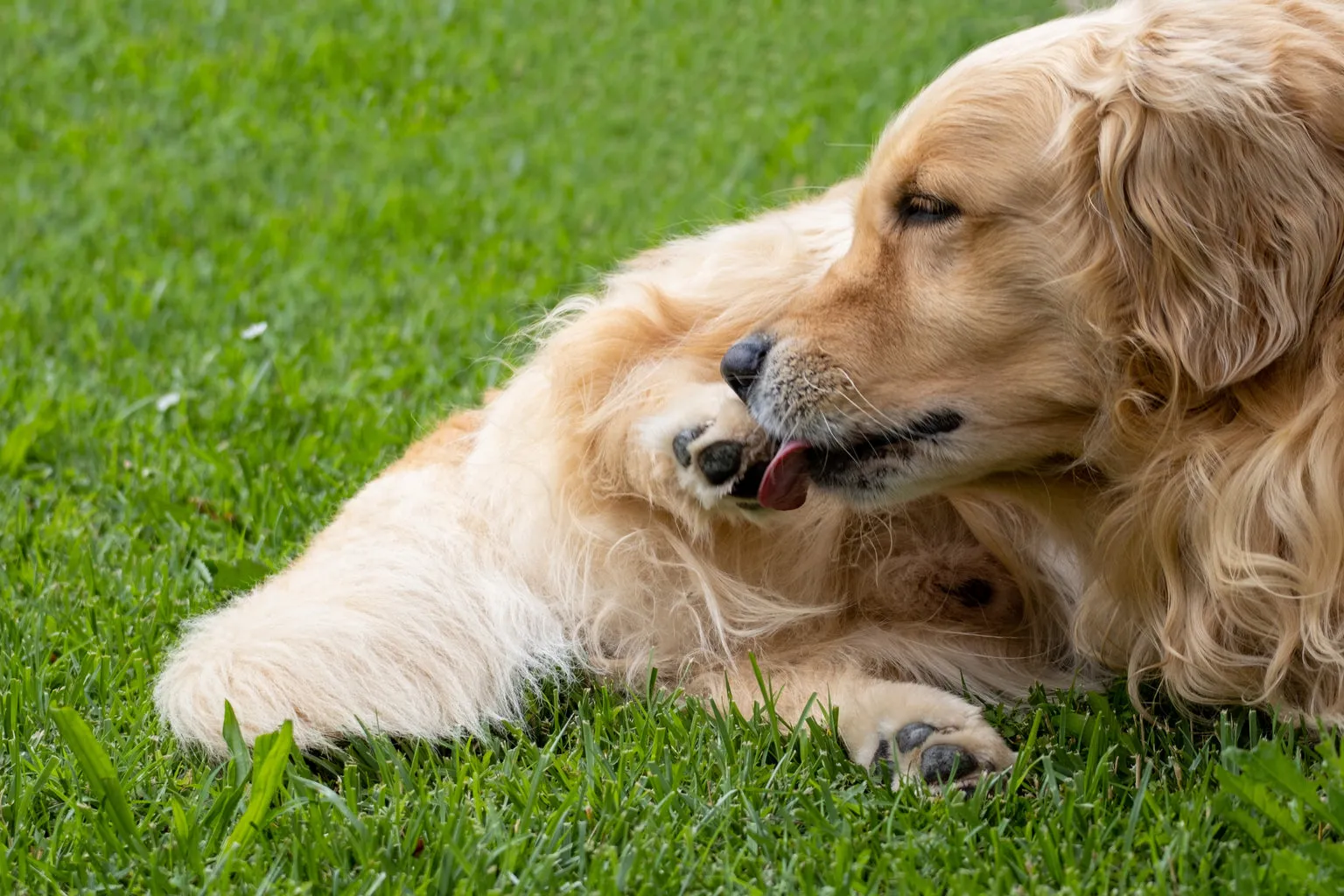
If you've noticed your dog licking joints – particularly around their knees, hips, elbows or wrists – you're not alone.
It's one of the most common behaviours dog owners question and it can mean anything from normal self-grooming to a signal that something needs attention. Here's what's most likely going on and when to act...
Common Reasons Dogs Lick Their Joints
Joint Pain or Arthritis
This is one of the most frequent causes, especially in older or larger breeds. Osteoarthritis (OA) gradually breaks down the cartilage cushioning the joints, causing chronic low-grade inflammation that worsens with activity.
Because dogs rarely vocalise their discomfort, licking the sore area is their way of communicating discomfort.
Labradors, Golden Retrievers, German Shepherds and Rottweilers are particularly susceptible due to the load they carry across their joints. If your large breed dog is over five or any dog over seven is licking a joint consistently, joint health deserves attention.

Injury or Trauma
A sprain, strain or minor knock can trigger licking without you ever witnessing the incident. Post-exercise soreness after an unusually active day can also be the culprit – this typically resolves within 24–48 hours.
If it doesn't, or if you notice warmth, visible swelling or sensitivity when you gently press the area, see your vet. A dog who flinches or moves away when you touch a joint is telling you clearly that it hurts.
Allergies and Skin Irritation
Allergies are an underappreciated driver of joint-area licking. Dogs with environmental allergies (grass pollen, dust mites) or food allergies often develop itching around the thinner-skinned joint areas, particularly the wrists and ankles.
Look for redness, small bumps, flaking, or hot spots on the skin over the joint – the joint itself may be completely fine while the overlying skin is the problem.
Seasonal patterns are a useful clue. If the licking intensifies at the same time each year, environmental allergies are worth discussing with your vet.

Infections or Wounds
A small cut, insect bite or abrasion that's easy to miss can cause significant irritation.

Bacterial and yeast (fungal) infections can also develop around joints. Yeast in particular, produces a musty odour and may discolour the surrounding fur brownish or rust-tinged.
Part the fur and inspect carefully. Heat at the site, discharge or an unusual smell are all reasons to get a vet appointment promptly.
Anxiety, Stress or Boredom
Not all licking has a physical cause. Repetitive licking releases endorphins, giving dogs a genuine chemical sense of comfort – making it a common coping mechanism for dogs experiencing separation anxiety, household changes or under-stimulation.
What starts as a stress response can become a compulsive habit that persists long after the original trigger has gone.
If the licking coincides with a change in your routine or home environment, the connection may not be coincidental.
Neurological or Underlying Medical Issues
Less commonly, persistent licking without an obvious cause can point to neuropathic pain, which is essentially discomfort originating in the nerves rather than the joint or skin.
Spinal conditions like intervertebral disc disease (IVDD) can create sensations in the limbs that dogs respond to by licking.
Autoimmune conditions such as immune-mediated polyarthritis, or systemic issues like thyroid disorders, can also manifest this way.
If your vet has examined your dog, ruled out visible causes and the licking continues – particularly on one specific spot – further investigation including bloodwork or imaging is reasonable to ask about.
To Sum Up
Joint licking exists on a wide spectrum – from routine grooming to a sign of chronic pain, infection or an underlying condition.
The key things to monitor are where your dog is licking, how often, and whether anything else seems off. This could be changes in gait, energy or appetite. These changes should always be taken as seriously as joint licking.
When in doubt, your vet is the right first call. The earlier a genuine problem is identified, the more options you'll have to manage it.