Dog Phobias: Common Dog Fears And Phobias
If you’ve landed on this page, you’re probably wondering what a dog phobia is and what causes them. Well, let’s start simple.
A phobia is defined by Merriam-Webster as “an exaggerated, usually inexplicable and illogical fear of a particular object, class of objects or situation.”
The thing is, our furry friends have phobias just like us.
In this guide, we run through why dogs get phobias and the most common dog phobias to know about.
Why do dogs get phobias?
There are multiple reasons why dogs can get phobias, but the main dog phobias are caused by genetics, life experience and what they learn and experience in adulthood.
Let’s go back to where it all starts – their genetics. According to a study published by Translation Psychiatry, heritability for fearfulness was estimated at 36–49%. This essentially means that genetics are thought to have played a significant role in the fear and anxiety that dogs have just through their genetics.
Next up, is the life experiences, but more specifically those at the earlier stages of their lives. Feeding into the nature vs nurture debate, this also plays a huge part in why dogs get phobias.
According to a study on over 13,700 dogs in Finland and published in Scientific Reports, it concludes that social fearfulness was associated with several factors, including urban environment, poor socialisation during puppyhood, infrequent participation in training and other activities, small body size, female sex and neutering. So, you can see why puppyhood is a crucial time in defining and nurturing these dog phobias.
Finally, in their later stages, their experiences and quality of life can be a huge contributing factor to dog phobias. Just one negative experience can be enough to create a phobic response. According to another study published by Translation Psychiatry, environmental factors such as lack of socialization, poor maternal care and aversive learning are known risk factors for canine fear.
Common Dog Phobias
Every dog is different and so are their phobias. Naturally, you may be wondering which dog phobias vets tend to see, so we went ahead and asked them.
“I have seen many dogs that need prescription meds for anxiety that stems from under-socialization,” says Dr. Valerie Henley, DVM.
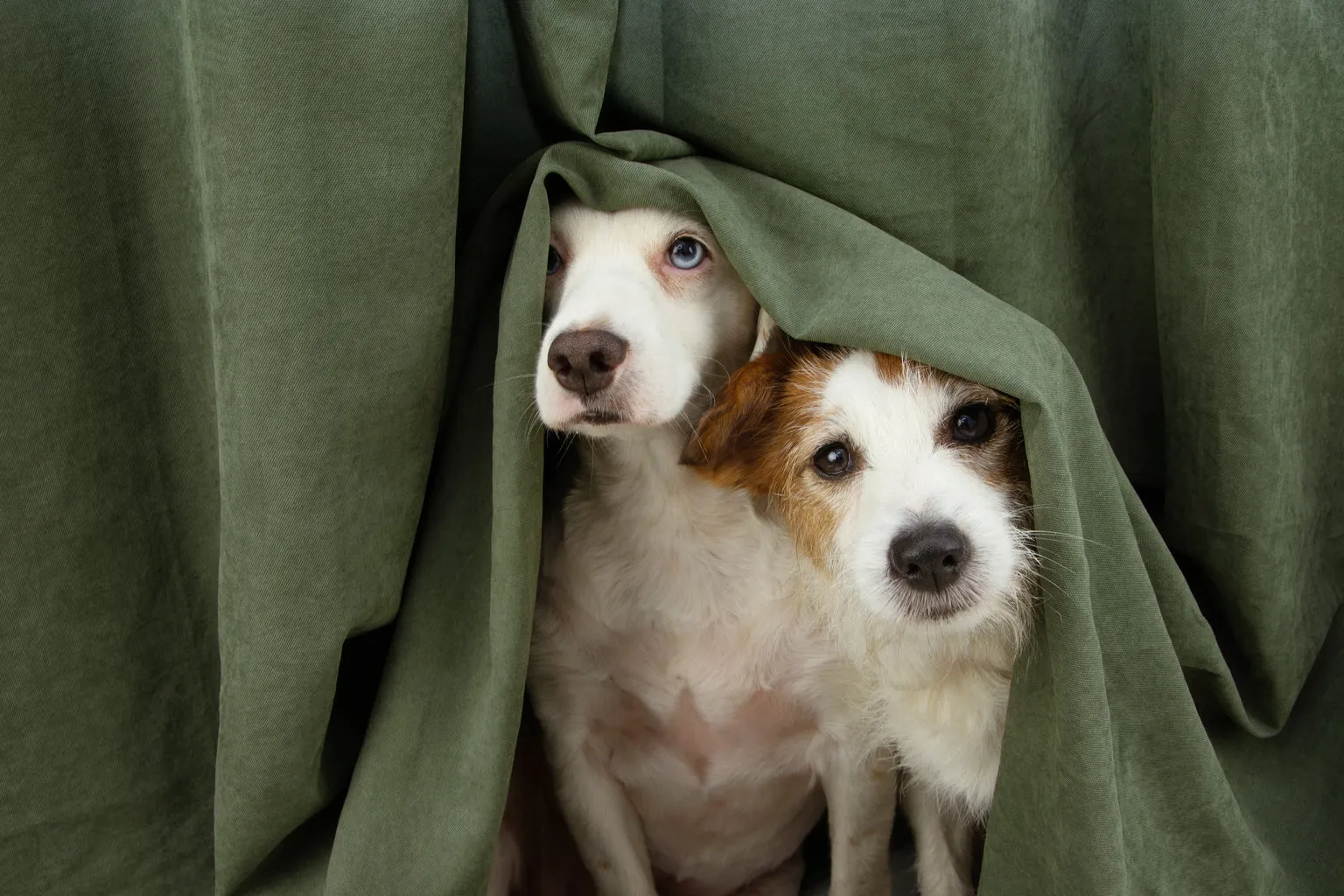
“But many dogs have phobias of noises, like storms, and honestly this phobia is difficult to address since some dogs develop this as they get older. Plus, storms can be unpredictable at times.”
Okay, so let's get into it...
Dog Phobia 1: Thunderstorms
Thunderstorms are a sensory overload. The noise, the low-frequency sounds, lightning flashes, pressure changes, static electricity and some rain. This natural stimulus isn’t something that dogs can escape, so the fear can tend to stay and worsen, rather than make them more resilient to it.

Dog Phobia 2: Fireworks
This stimulus is quite similar to thunderstorms in that it’s a sensory experience, but fireworks themselves are more unpredictable in nature. They can crackle and move in any direction and the noise pattern of crack-then-boom tends to be quite difficult for a dog’s nervous system to get used to.
Dog Phobia 3: Loud Noises (vacuums, sirens, alarms)
Dogs are really sensitive to hearing. Much more than humans. They can detect frequencies up to 65,000 Hz, whereas we can only detect frequencies up to 20,000 Hz. So, everyday noises like vacuums, sirens, alarms and the doorbell can cause discomfort for them if they’re in close proximity.

Dog Phobia 4: Separation From Owners
Dogs are genetically wired to be social creatures – it’s usually why you’ll see them thrive in packs in the dog park. For some dogs, when they’re left alone, it can create a real panic response. Higher cortisol levels, more destructive behavior or isolation.
Dog Phobia 5: Strangers
The puppyhood stage of a dog’s life is really important. If they’re not exposed to a wide variety of people, it can cause them to be afraid of people they don’t know.
According to a study published by Scientific Reports, around 20–25% of dogs show fearfulness of strangers, other dogs, or unfamiliar situations. That's pretty astounding.
Dog Phobia 6: Other Dogs
When some dogs aren’t socialized with other dogs during their puppyhood, they can sometimes develop a fear of them. If a dog isn’t able to naturally read another dog’s body language, it can get tricky for them to feel safe and understand what’s going on around them.

Dog Phobia 7: Veterinarian Visits
There’s a lot going on in a vet's office; loud noises, all different kinds of animals, stress, panic, upset. This can sometimes cause a real fear of going somewhere that triggers this kind of stress response.
According to a study of over 26,000 dogs by PLOS One, 41% displayed mild to moderate fearful behaviour during veterinary examination, and 14% exhibited severe or extreme fear, which helps to explain just how common this phobia really is.
Dog Phobia 8: Grooming (nail trimming and baths)
When it comes to sensitive parts of a dog’s body, their paws and ears are up there. So, it’s only natural that when they’re being handled, they can feel threatened.
If they get their nails accidentally trimmed too short, it can sometimes cause a lasting aversion. When it comes to baths, this is an experience that triggers a lot of different sensations; water, being held back and the splashing noises.
Dog Phobia 9: Car Rides
Cars are a tricky place for some dogs, because they may experience car sickness, nausea or associate it with going somewhere that’s triggering, like the vet's office.

Dog Phobia 10: Slippery Floors
Dogs walk on all fours and so their grip is super important. It’s stability in every sense. So, naturally, when a floor is slippery, they can tend to lose control of their posture and can start to feel insecure about walking on floors of this nature.
Dog Phobia 11: Stairs
If a dog is young, they will most likely be figuring out how to properly walk and encounter things like the stairs, so there’s a natural fear there.
For more senior dogs, this can be painful. As dogs age, their mobility naturally degrades. Some even experience Osteoarthritis. It can really feel like a bad experience for them.
Dog Phobia 12: Costumes or People in Uniforms
Dogs usually make sense of humans in three ways; their silhouette, gait and facial expressions. If there’s something that disrupts any of these, it can be difficult for a dog to read a human. Are they human or are they something else?
Dog Phobia 13: Sudden Movements or Unfamiliar Objects
Dogs tend to detect movement and use it as part of their survival system. If something moves when they don’t expect it, then it can trigger a stress response. The same goes for unfamiliar objects.
Dog Phobia 14: Being Left Alone at Night
As we know above, dogs use their sight to feed into their survival instincts. The night of course, removes this element, because they can’t see. This can tend to make everyday sounds even more extreme, because one of their key senses isn’t available.
FAQs
Why does my dog hate stairs?
Stairs are genuinely disorienting for many dogs and the fear is more common than most owners realise. Dogs rely heavily on grip to feel physically secure. Open-tread stairs don’t have great grip, unpredictable depth and a visual drop that a dog brain has no evolutionary framework for.
Puppies that weren't exposed to stairs during puppyhood can often develop a long-lasting desire to avoid stairs and a single slip or fall at any age can be enough to create a conditioned fear that sticks.
Older dogs may also begin avoiding stairs due to undiagnosed joint discomfort, so if the behaviour appears suddenly in an adult dog, a vet check is always worth doing before assuming it's psychological.
Why Does My Dog Hate Water?
A dog's hatred of water almost always comes down to one of three things; a bad early experience, no early experience at all or a physical sensitivity to the sensation.
Dogs that were never introduced to water during puppyhood have no reference point for it being safe and their first encounter — especially if it involves being placed in a bath or splashed unexpectedly — can be overwhelming enough to create a lasting negative association.
The combination of loss of footing, cold temperature and the inability to escape the situation makes bathing especially stressful even for dogs without a previous bad experience.
Why Does My Dog Hate Other Dogs?
Dogs that fear or react badly to other dogs are almost always dogs that weren't socialised with them properly in early life — not dogs that had a bad experience.
Dog body language is a complex, learned system of signals and dogs that weren't exposed to a range of other dogs during the socialisation window simply never learned to read it.
What looks like aggression on-leash is usually just fear. A dog that can’t decode another dog's intentions can cause alarm bells to go off.
On-leash reactivity makes this worse, because the dog cannot escape, making these interactions more intense. Dogs that did have a traumatic encounter with another dog — an attack, a bullying interaction — can also develop a genuine phobia that generalizes to all dogs regardless of size or intent.
Why Does My Dog Hate Men?
Fear of men specifically — rather than strangers in general — is one of the most reliably reported patterns in dog behaviour and the explanation is largely sensory and experiential. Men tend to be taller, broader and louder than women.
They have deeper voices, more direct eye contact and movement patterns that can read as more abrupt or imposing to a dog.
If a dog's primary socialisation was with women or children and it had limited positive exposure to men during puppyhood, the male silhouette itself becomes an unfamiliar and therefore threatening stimulus.
In dogs with a history of abuse or neglect — where the perpetrator was male — the fear is often deeper and more generalised, extending to men of all builds and ages.
The good news is that fear of men responds well to controlled, positive counter-conditioning. Calm men offering high-value treats at a distance, with no pressure to interact, can change the association over time.
To Sum Up
Dog phobias can be caused by a few overarching factors; their genetics and their life experiences in puppyhood and adulthood. Just like how us humans are afraid of certain things, so are dogs.
But, our furry friends are built differently to us, so things like sensitivity to sounds and loneliness are more intense for them.
Understanding their dog phobias is the first step to a real solution.