
Ear infections are among the most common conditions vets treat in dogs – and for many dogs, they keep coming back.
Understanding why ear infections happen, what they look like, and what contributes to ear health can help owners catch problems earlier and have more informed conversations with their vet.
Why Dogs Are Prone to Ear Infections
A dog's ear canal is shaped like an "L" – it runs downward, then turns horizontally toward the eardrum. This anatomy makes it far easier for moisture, debris, and microorganisms to become trapped. In comparison, humans have a relatively straight ear canal.
For breeds with floppy ears – Cocker Spaniels, Basset Hounds, Labrador Retrievers – that flap acts like a lid, restricting airflow and creating the warm, moist environment that bacteria and yeast thrive in. Dogs with narrow ear canals or heavy hair growth around the ears face similar challenges.

This isn't a failure of care. It's biology. Many dogs who develop ear infections live in perfectly clean homes and have attentive owners. It's just that the anatomy makes some dogs structurally vulnerable from the start.
What Causes Dog Ear Infections?
Ear infections in dogs are typically categorized by what's driving them. The three main types:
Bacterial Infections
The most common type. Bacteria – often Staphylococcus or Pseudomonas species – colonise the ear canal, frequently as a secondary consequence of another issue like allergies or moisture. Bacterial infections can be acute (a single episode) or chronic if the root cause isn't addressed.
Yeast Overgrowth
Malassezia pachydermatis is the yeast most commonly responsible for canine ear infections. It's actually a normal resident of a dog's skin and ears, but when the ear environment shifts – more moisture, more warmth, compromised skin barrier – it can proliferate quicker.
Yeast infections typically produce a distinctive musty or "corn chip" odor and dark, waxy discharge. If your vet has confirmed a yeast-driven infection, our guide to yeast infections in dogs covers the condition in more detail. The more you know, the better.
Ear Mites
More common in puppies than adult dogs, and more often seen in cats, ear mites (Otodectes cynotis) cause intense itching and a dark, coffee-ground-like discharge.
They're highly contagious between animals in the same household. Ear mites are a distinct diagnosis from bacterial or yeast infections and are treated differently.
Other contributing factors:
Allergies
Environmental and food allergies are among the most significant underlying triggers for recurring ear infections. Inflammation driven by an allergic response can disrupt the ear canal environment. See our full guide to dog allergies for more context.
Moisture
Dogs who swim regularly or are bathed frequently without thorough ear drying are at increased risk.

Foreign Bodies
Grass seeds and debris can lodge in the ear canal, particularly in dogs who spend time outdoors in fields.
Signs of an Ear Infection in Dogs
Ear infections are rarely silent. Most dogs will show at least one of the following:
- Head shaking – one of the most common early signs; the dog is trying to clear discomfort.
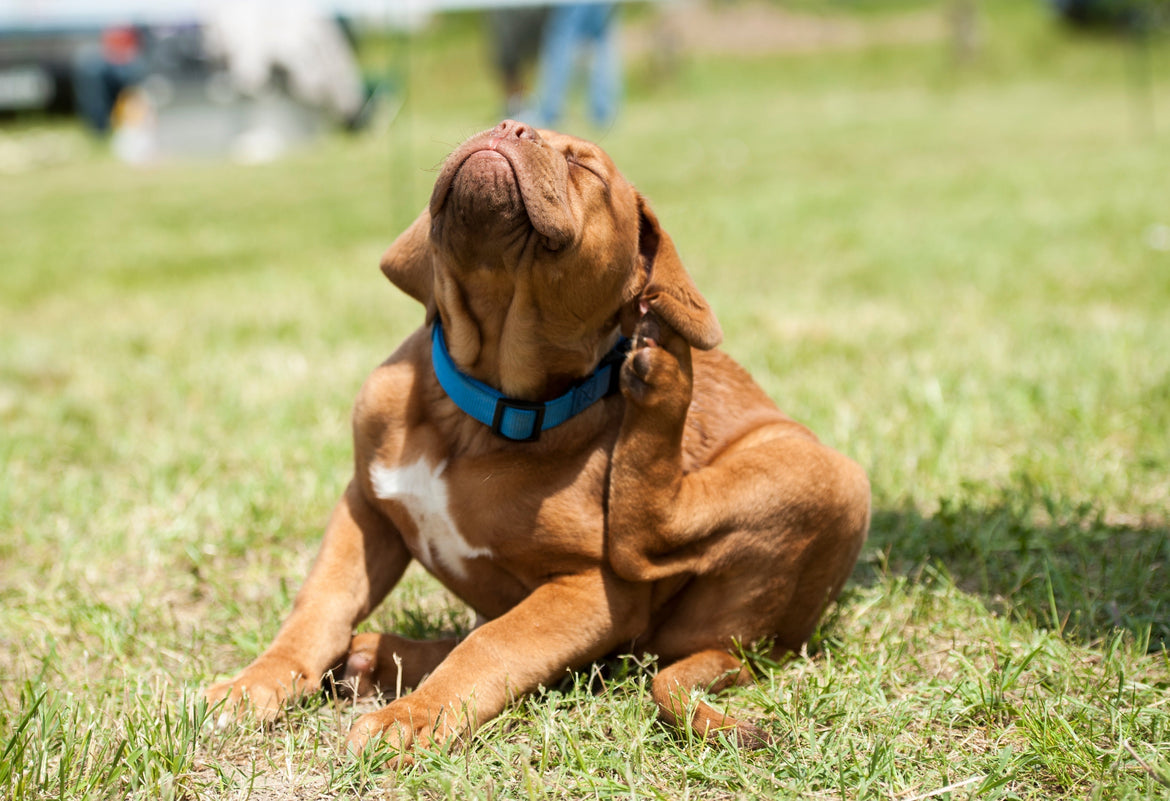
- Scratching at the ear – with a paw, or rubbing the ear against furniture or flooring.
- Odor – a yeasty, musty, or foul smell coming from the ear.
- Discharge – can range from dark brown and waxy (often yeast) to yellow or green (often bacterial); colour and consistency matter and are worth noting for your vet.
- Redness or swelling – visible inflammation inside the ear flap or at the opening of the canal.
- Head tilting – particularly if the infection has progressed or reached the middle ear.
- Sensitivity to touch – the dog pulls away or shows discomfort when the ear is handled.
These are things to recognise and bring to your vet – not a checklist for self-diagnosis. The pathogen involved, the depth of infection, and any underlying conditions all need to be properly assessed before treatment begins.
Why Do Some Dogs Get Recurring Ear Infections?
If your dog has had more than one ear infection, the most important question isn't how to treat the current one – it's what's driving them in the first place.
Recurring ear infections almost always point to an underlying issue that hasn't been addressed:
- Unmanaged allergies – the most common culprit. Dogs with environmental allergies or food sensitivities experience ongoing inflammation that disrupts the ear canal's defences, creating repeated opportunities for infection. Managing the allergy, not just the infection, is what breaks the cycle.
- Anatomy – some breeds are structurally predisposed and need consistent preventive ear management.
- Moisture – dogs who swim regularly without appropriate ear care after each session.
- Hormonal conditions – hypothyroidism and other hormonal imbalances can alter skin and ear health, making infections more likely.
Treating each infection individually without asking why it keeps returning is the equivalent of mopping up water without fixing the leak. Your vet can help identify the root cause – and for allergy-driven cases, this often involves skin testing, dietary trials, or referral to a veterinary dermatologist.
What Happens at the Vet

A thorough ear exam goes beyond a visual check. Your vet will typically:
- Examine the ear canal with an otoscope to assess the extent of infection and check the eardrum is intact.
- Take a sample for cytology – a smear of the discharge examined under a microscope. This identifies whether the infection is bacterial, yeast-driven, or involves mites, which directly determines the appropriate treatment.
- Recommend treatment based on the pathogen – bacterial infections are treated with antibiotic ear drops; yeast infections with antifungal medications; mites with antiparasitic treatment. These are not interchangeable, which is why assessment before treatment matters.
In some cases, particularly where the infection is deep or the eardrum is affected, oral medication or sedated ear flushing may be required.
Supporting Ear Health Between Infections
For dogs who are prone to ear infections, what happens between episodes matters as much as the treatment itself. Always discuss any ear care routine with your vet first – the right approach will depend on your dog's individual situation.
Ear Cleaning
Regular cleaning with a vet recommended ear cleaner can help remove debris and excess moisture before problems develop.
The technique matters: Never insert anything into the canal, and let the dog shake after application. Ask your vet to demonstrate if you're uncertain – incorrect cleaning can push debris deeper.
Managing Underlying Allergies
For dogs where allergies are the root cause, working with your vet on an allergy management plan is the most impactful thing you can do.
This might include dietary changes, environmental management, or medication. Our guides to dog allergies and seasonal allergies in dogs cover the bigger picture.
Keeping Ears Dry
If your dog swims, dry the ears thoroughly afterwards – gently, with a soft cloth around the outer ear. Some dogs benefit from an ear-drying solution recommended by their vet.
Gut Health and Immune Support
For dogs with allergy-driven recurring ear infections, the immune system's baseline health matters.
Our guide to gut health in dogs and article on probiotics for dogs explore this connection in more detail.
FAQs
Can dog ear infections go away on their own?
Dog ear infections rarely resolve without treatment. Mild, very early-stage infections may occasionally improve, but most worsen over time if left untreated. Without identifying the specific pathogen – bacterial, yeast, or mites – the infection continues to progress.
A superficial outer ear infection can advance to the middle or inner ear, causing significant pain, balance problems, and in severe cases, permanent hearing damage.
Over-the-counter remedies are not a substitute for a proper diagnosis. If you notice head shaking, scratching, odor, or discharge, book a vet appointment promptly rather than waiting to see if the dog ear infection clears on its own.
Are some breeds more prone to ear infections?
Yes – certain dogs are significantly more prone to ear infections due to anatomy and genetics.
Floppy-eared breeds like Cocker Spaniels, Basset Hounds, and Labrador Retrievers trap moisture and restrict airflow, creating ideal conditions for bacterial and yeast growth. Dogs with heavy hair in the ear canal – Poodles, Schnauzers – face similar challenges.
Breeds predisposed to allergies, including French Bulldogs, Golden Retrievers, and West Highland Terriers, also experience higher rates of recurring ear infection because allergic inflammation disrupts the ear canal environment.
If you have a French Bulldog, our guide to French Bulldog allergies covers the specific risks for this breed.
Can allergies cause ear infections in dogs?
Yes. Allergies are one of the most significant underlying causes of recurring dog ear infections. When a dog has environmental or food allergies, the resulting immune response triggers inflammation throughout the body – including the skin lining the ear canal. This disrupts the ear's natural defences, altering the local environment in ways that allow bacteria and yeast to thrive.
A dog with unmanaged allergies may cycle through repeated ear infections no matter how well each individual episode is treated. Identifying and managing the underlying allergy – not just the infection – is essential. Our guide to dog allergies explains the bigger picture.
How can I prevent ear infections in my dog?
Preventing dog ear infections involves consistent management across three areas. First, ear hygiene: Clean your dog's ears regularly with a vet recommended cleaner and dry them thoroughly after swimming or bathing – moisture is a primary trigger.
Second, allergy management: If allergies are an underlying factor, work with your vet on a long-term plan to reduce inflammation at its source.
Third, regular monitoring: Check your dog's ears weekly for early signs – odor, redness, or discharge – so problems are caught before they escalate. For breeds that are anatomically predisposed, ongoing ear care is a permanent part of their health routine, not a temporary measure.
To Sum Up
Dog ear infections are common, painful, and – with the right approach – very manageable.
The key is understanding that a single infection treated in isolation is rarely the full picture; for dogs who keep getting them, the real work lies in identifying and addressing the underlying cause, whether that's allergies, anatomy, or moisture.
Stay consistent with ear hygiene, work closely with your vet, and pay attention to the early signs – catching a dog ear infection before it escalates makes treatment simpler and recovery faster.